

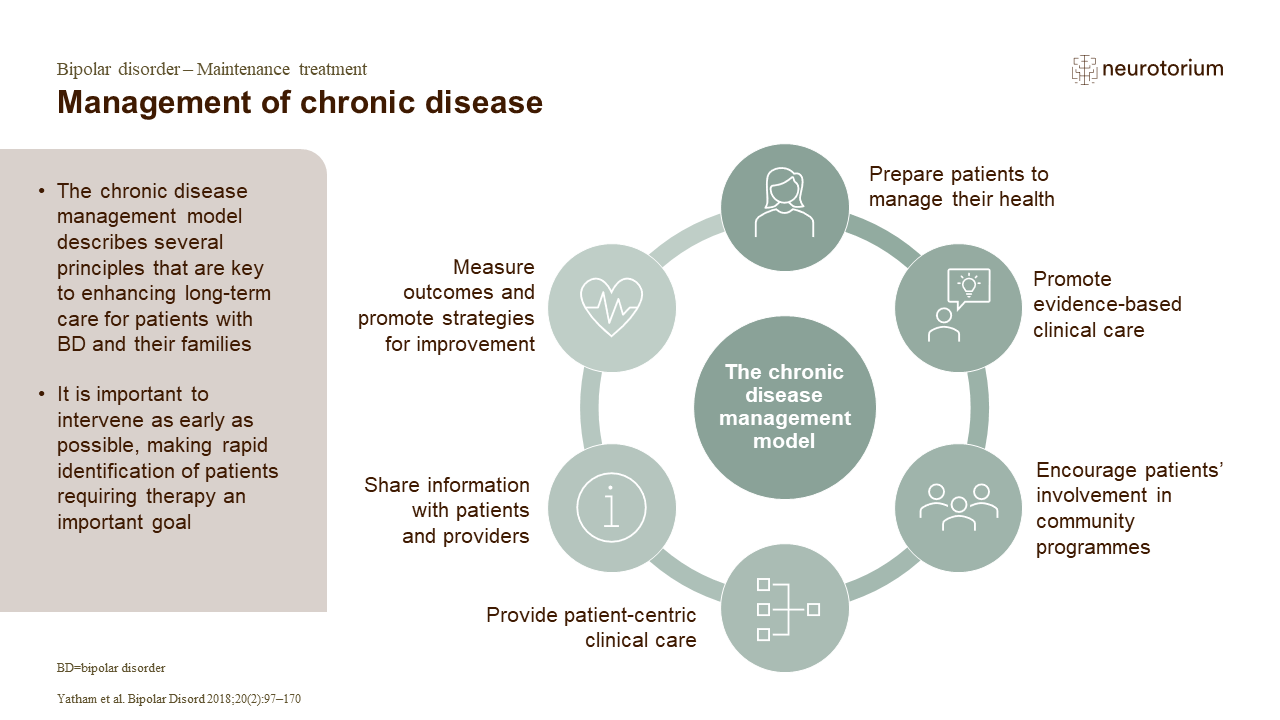
The management of bipolar disorder requires a long-term, multidisciplinary approach, due to its chronic, relapsing and remitting nature.1 Following basic clinical management of the acute condition, which involves attention to diagnosis, comorbidities, and medical health, the initial steps of care usually include patient health education and pharmacotherapy.1 All patients should have access to a primary care provider to attend to the patient’s mental and physical health needs, and wherever possible, family members or close friends should be included as part of the care team.1 In an ideal setting, patients should also have access to a healthcare team, ongoing monitoring, psychosocial support, and referral, where needed, to community resources.1,2
References:
1. Yatham LN, Kennedy SH, Parikh SV, et al. Canadian Network for Mood and Anxiety Treatments (CANMAT) and International Society for Bipolar Disorders (ISBD) 2018 guidelines for the management of patients with bipolar disorder. Bipolar Disord 2018; 20 (2): 97–170.
2. Parikh SV, Kennedy SH. Further integration of patient, provider, and systems treatment approaches in bipolar disorder: where new evidence meets practice reality. The 3. Wiley-Blackwell Handbook of Mood Disorders, Second edition, John Wiley and Sons, 2013.