

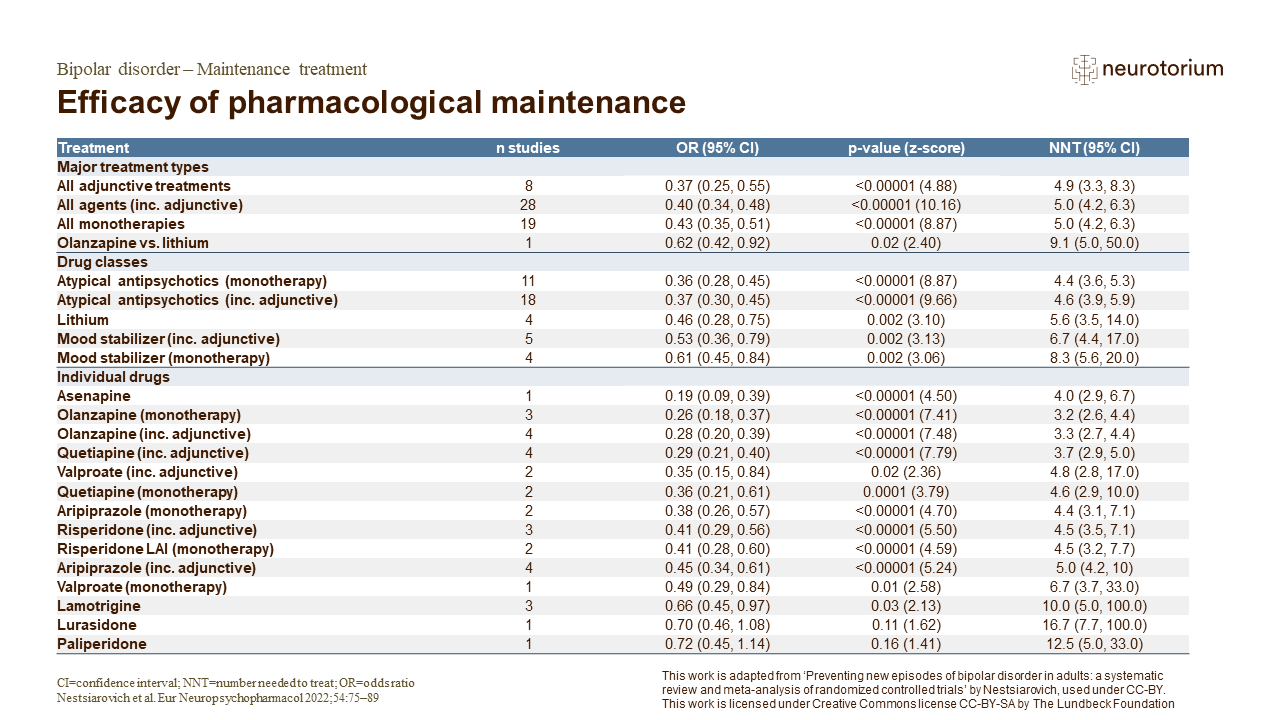
In a meta-analysis of randomized, controlled trials of maintenance pharmacotherapy in bipolar disorder, asenapine, olanzapine, and quetiapine showed the highest efficacy over placebo in preventing any type of new episode.1 Among the classes of drugs investigated, the risk of any subsequent mood episode of bipolar disorder was lowest with atypical antipsychotics, lithium, and mood-stabilizing drugs compared with placebo.1 One study of aripiprazole long-acting injectable was included in the results, which showed a halving of the rates of new episodes compared with placebo in people with bipolar disorder, however these data are not shown separately in the summary table shown on the slide.1 Furthermore, conclusions regarding the superiority of atypical antipsychotics were not made.1
The data from this meta-analysis align with recommendations from guidelines that first-line, long-term treatment options for bipolar disorder include lithium, aripiprazole, olanzapine, paliperidone, quetiapine, or risperidone (including long-acting injectable risperidone) monotherapy.1,2
References:
1. Nestsiarovich A, Gaudiot CES, Baldessarini RJ, et al. Preventing new episodes of bipolar disorder in adults: a systematic review and meta-analysis of randomized controlled trials. Eur Neuropsychopharmacol 2022; 54: 75–89.
2. Fountoulakis KN, Grunze H, Vieta E, et al. The International College of Neuro-Psychopharmacology (CINP) treatment guidelines for bipolar disorder in adults (CINP-BD-2017), Part 3: the clinical guidelines. Int J Neuropsychopharmacol 2017; 20 (2): 180–195.