

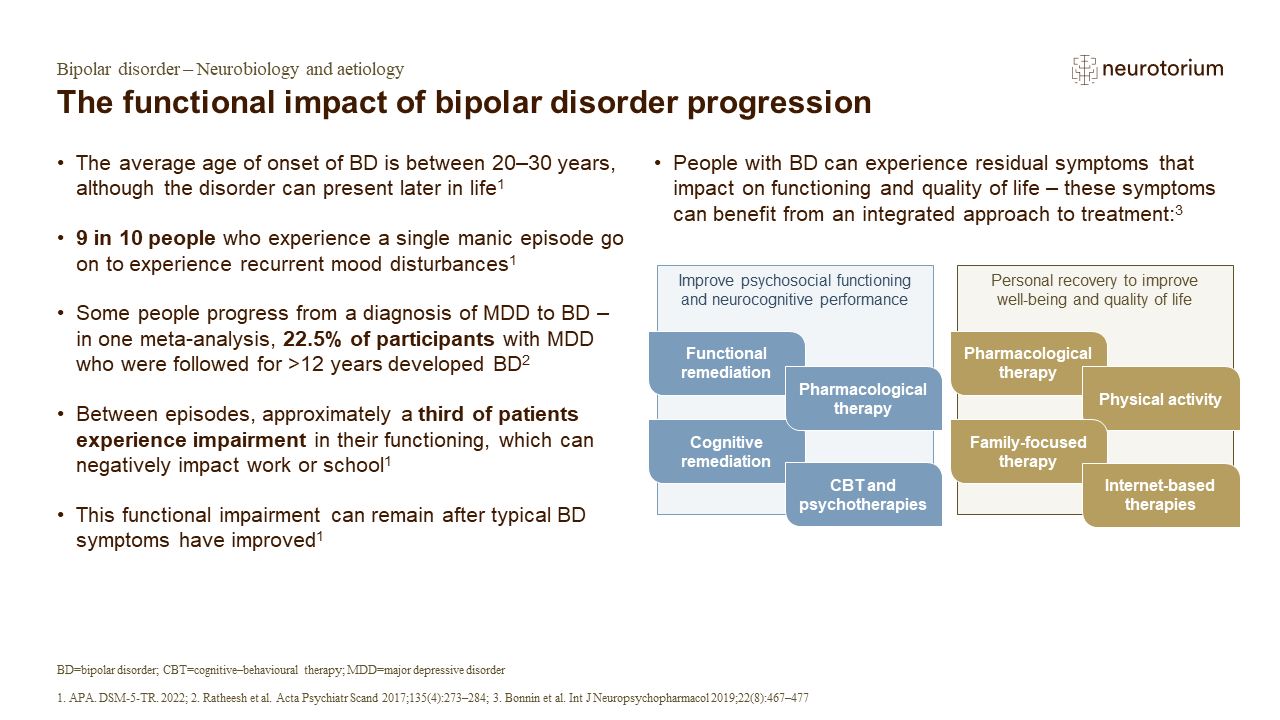
As outlined on the slide, bipolar disorder is often a progressive disease, characterized by recurrent mood episodes punctuating a background of persistent functioning impairments.1 Because of this progressive nature, and the effect that symptoms can have on patient functioning, helping patients with bipolar disorder to improve their functioning is important.3 Moreover, some have argued that preventing or stalling the progression of bipolar disease can and should be a clinical goal.4
References:
1. American Psychiatric Association (APA). Diagnostic and Statistical Manual of Mental Disorders. Fifth edition, text revision. Washington DC: APA; 2022.
2. Ratheesh A, Davey C, Hetrick S, et al. A systematic review and meta-analysis of prospective transition from major depression to bipolar disorder. Acta Psychiatr Scand 2017; 135 (4): 273–284.
3. Bonnín CDM, Reinares M, Martínez-Arán A, et al. Improving functioning, quality of life, and well-being in patients with bipolar disorder. Int J Neuropsychopharmacol 2019; 22 (8): 467–477.
4. Post RM. How to prevent the malignant progression of bipolar disorder. Braz J Psychiatry 2020; 42 (5): 552–557.