

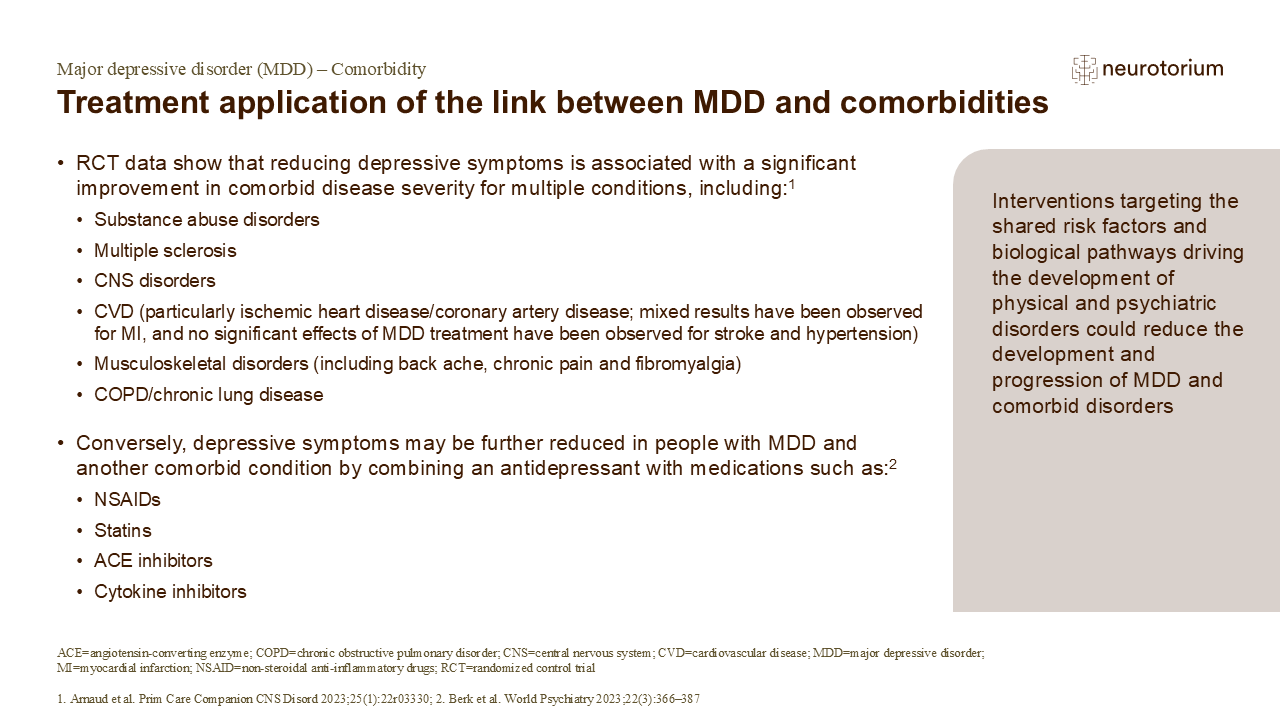
Data from studies suggests that reducing depressive symptoms is associated with significant improvements in many comorbid diseases, including substance abuse, CNS, and musculoskeletal disorders.1 In cardiovascular and metabolic disorders (particularly myocardial infarction and type 2 diabetes), the findings are mixed, with a significant improvement observed only in some comorbidity outcomes or only among some patient subgroups.1,2 In addition, some antidepressant treatments may provide additional benefit in the treatment of some comorbid conditions in patients with MDD, but potentially be associated with adverse events in others diseases (e.g., SSRIs may improve glycaemic control and reduce hospitalization rates in coronary heart disease, but increase the risk of osteoporosis and bone fractures).2 Medications used preventatively for physical disorders (e.g., statins for CVD, metformin for diabetes) are currently being evaluated for possible effects on reducing the risk of depression development.2
A recent study in older individuals (≥70 years) showed that antidepressant treatment increased disability-free survival by 12% in those with depression and by 14% in those with depression and comorbid cardiometabolic diseases.3