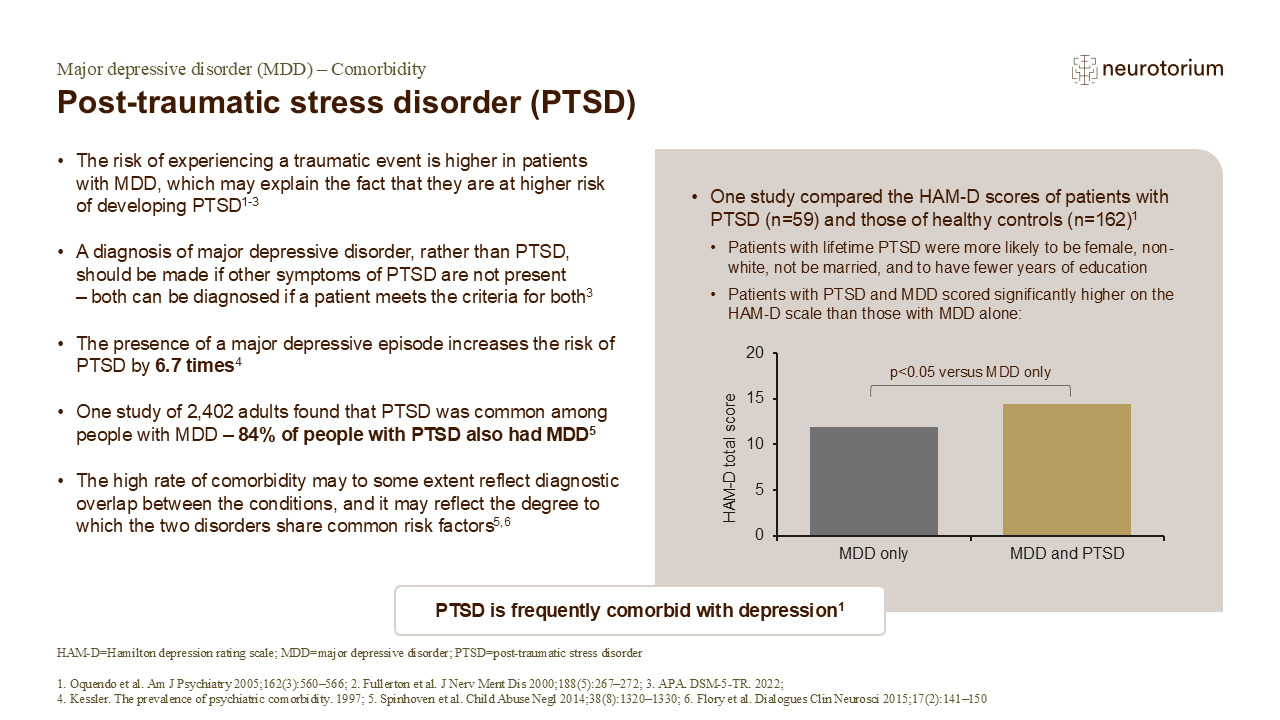
The essential feature of PTSD is the development of a certain set of symptoms after exposure to a traumatic event; the symptoms include fear-based re-experiencing of the traumatic event, but can also include anhedonia, and dysphoric mood states.3 Therefore, separating the diagnosis from one of major depressive disorder is important.3 A diagnosis of major depressive disorder should be made if the other symptoms of PTSD are not present – specifically intrusive symptoms relating to memories or flashbacks of, or persistent avoidance of stimuli relating to, the traumatic event.3
References:
1.Oquendo M, Brent DA, Birmaher B, et al. Posttraumatic stress disorder comorbid with major depression: factors mediating the association with suicidal behavior. Am J Psychiatry 2005; 162 (3): 560–566.
2.Fullerton CS, Ursano RJ, Epstein RS, et al. Peritraumatic dissociation following motor vehicle accidents: relationship to prior trauma and prior major depression. J Nerv Ment Dis 2000; 188 (5): 267–272.
3.American Psychiatric Association. Diagnostic and Statistical Manual of Mental Disorders. Fifth Edition – text revision. © American Psychiatric Association, 2022.
4.Kessler RC. The prevalence of psychiatric comorbidity. In: Wetzler S, Sanderson WC (eds). An Einstein Psychiatry Publication, No. 14. Treatment Strategies for Patients with Psychiatric Comorbidity. John Wiley & Sons Inc. 1997.
5.Spinhoven P, Penninx BW, van Hemert AM, et al. Comorbidity of PTSD in anxiety and depressive disorders: prevalence and shared risk factors. Child Abuse Negl 2014; 38 (8): 1320–1330.
6.Flory JD, Yehuda R. Comorbidity between post-traumatic stress disorder and major depressive disorder: alternative explanations and treatment considerations. Dialogues Clin Neurosci 2015; 17 (2): 141–150.