

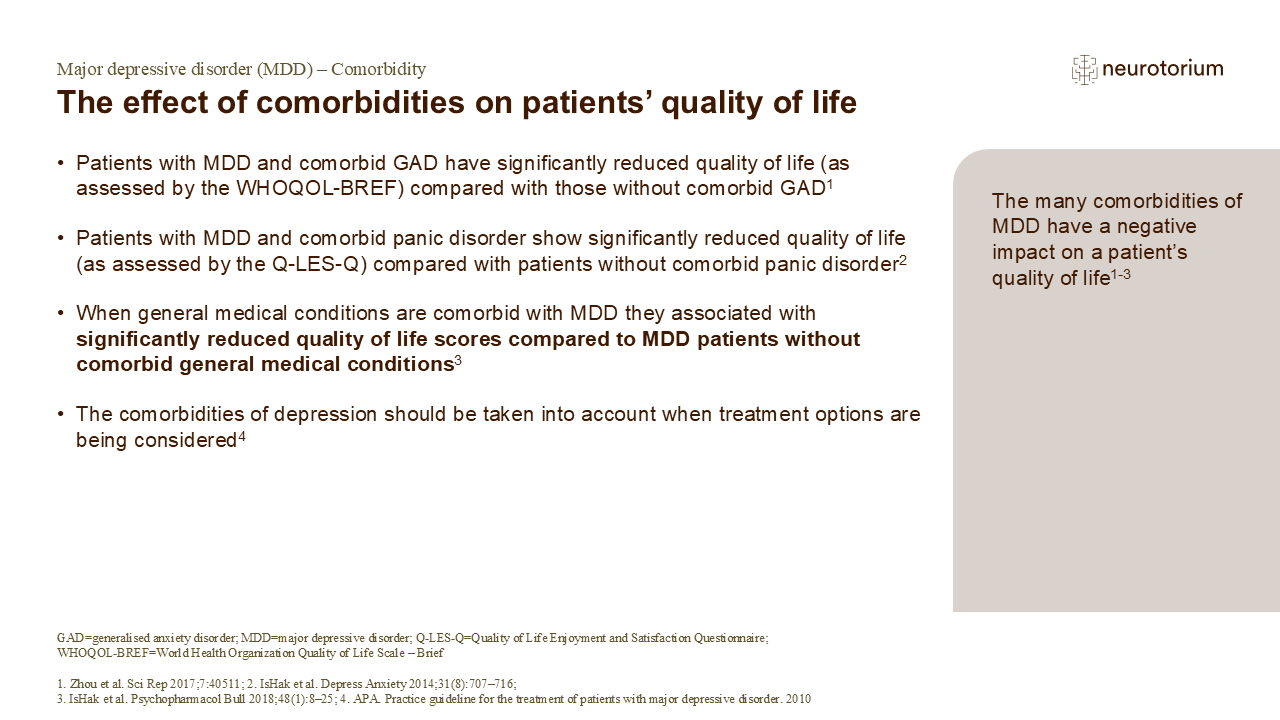
The various comorbidities of MDD (psychiatric and physical) adversely affect the quality of life of the patient.1-3 This emphasizes the point that attending physicians need to be alert to the potential of the various comorbidities when treating any patient with MDD.4
Treatment guidelines for MDD drawn up by the American Psychiatric Association make clear that the psychiatric and physical comorbidities of MDD need to be taken into account when considering treatment options.4 For example, when considering a patient with comorbid hypertension, antidepressant treatments linked to increases in blood pressure should be ruled out; in patients with co-occurring substance-use disorders, treatments known to interact with substances of abuse should be avoided.4
4.American Psychiatric Association. Practice guideline for the treatment of patients with major depressive disorder. 3rd edition. 2010.