

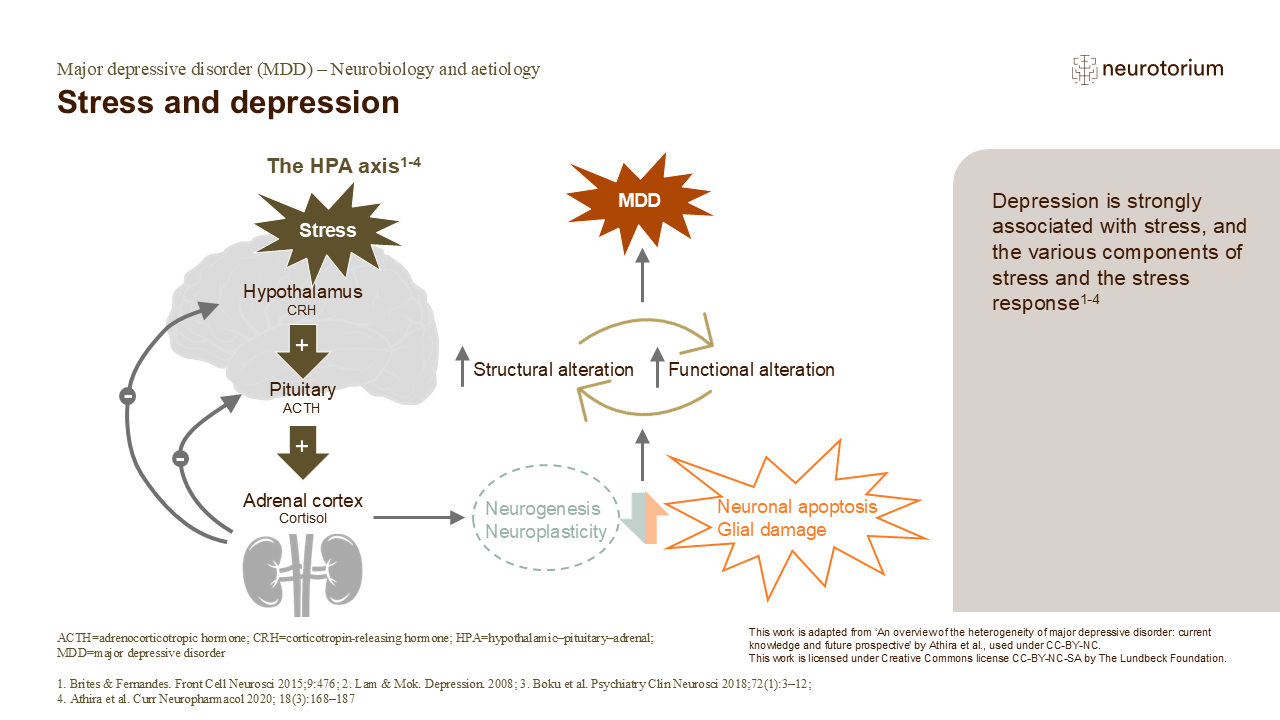
Major depressive disorder is a multifactorial disorder strongly associated with pathophysiological components related to stress.4 Chronic stress results in the dysregulation of the hypothalamo–pituitary–adrenal axis, resulting in higher levels of inflammation, higher oxidative and endoplasmic reticulum stress, increased levels of mitochondrial damage and dysfunction, and increased glutamate neurotransmission.4 These detrimental changes, coupled with reduced production of neurotrophic factors (such as the brain-derived neurotrophic factor), reduced monoamine neurotransmission, lower levels of the gamma-aminobutyric acid and reduced endocannabinoid signalling, then lead to structural and functional alterations in the brain, and to the development of major depressive disorder.4
References:
- Brites D, Fernandes A. Neuroinflammation and depression: microglia activation, extracellular microvesicles and microRNA dysregulation. Front Cell Neurosci 2015; 9: 476.
- Lam RW, Mok H. Depression. Oxford University Press. 2008.
- Boku S, Nakagawa S, Toda H, Hishimoto A. Neural basis of major depressive disorder: beyond monoamine hypothesis. Psychiatry Clin Neurosci 2018; 72 (1): 3–12.
- Athira KV, Bandopadhyay S, Samudrala PK, et al. An overview of the heterogeneity of major depressive disorder: current knowledge and future prospective. Curr Neuropharmacol 2020; 18 (3): 168–187.