

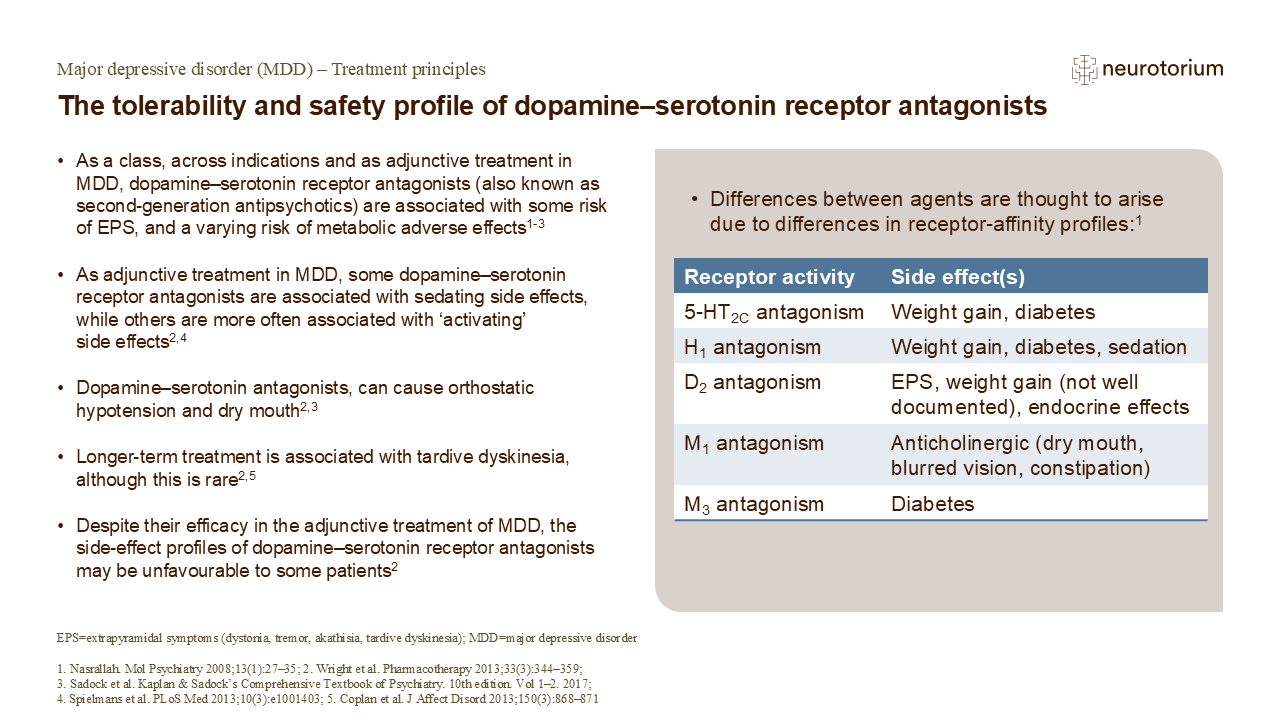
As a class, across indications and as adjunctive treatment in MDD, dopamine–serotonin receptor antagonists (also known as second-generation antipsychotics) are associated with some risk of extrapyramidal symptoms, and a varying risk of metabolic adverse effects.1-3
Metabolic adverse effects, such as weight gain, dyslipidaemia, and glucose dysregulation, have serious implications on the prognosis of MDD due to a risk of treatment-related diabetes and/or cardiovascular disease.1
In addition, dopamine–serotonin receptor antagonists are associated with orthostatic hypotension (low blood pressure when standing up) and dry mouth.2,3 Longer-term treatment with dopamine–serotonin receptor antagonists is associated with tardive dyskinesia, although this is rare.2,5 Although tardive dyskinesia is common in patients taking dopamine antagonists (so-called first-generation antipsychotics), with the increasing use of dopamine–serotonin receptor antagonists, fewer episodes and less severe symptoms are seen.3
A meta-analysis in MDD (n=3,543) showed that the odds ratio for rate of discontinuation for any reason with a dopamine–serotonin receptor antagonists (second-generation antipsychotic) versus placebo was 1.30 (p<0.01); this did not differ significantly between antipsychotics.6 Another meta-analysis in MDD (n=3,526) showed that dopamine–serotonin receptor antagonists differ substantially in their reported adverse event profiles.4 Differences between agents are thought to arise due to differences in receptor-affinity profiles.1
Tardive dyskinesia – a condition, associated with long-term antipsychotic therapy, characterized by involuntary, repetitive movements of the facial muscles, the tongue, and the muscles of the limbs.
References: