

Among the difficulties of studying the link between chocolate and migraine is the variation in chocolate that is sold to consumers; the fat content of marketed chocolate can vary between 33–37 grams per 100, and the carbohydrate content can vary between 52–60 grams per 100.[Lippi et al., 2014]
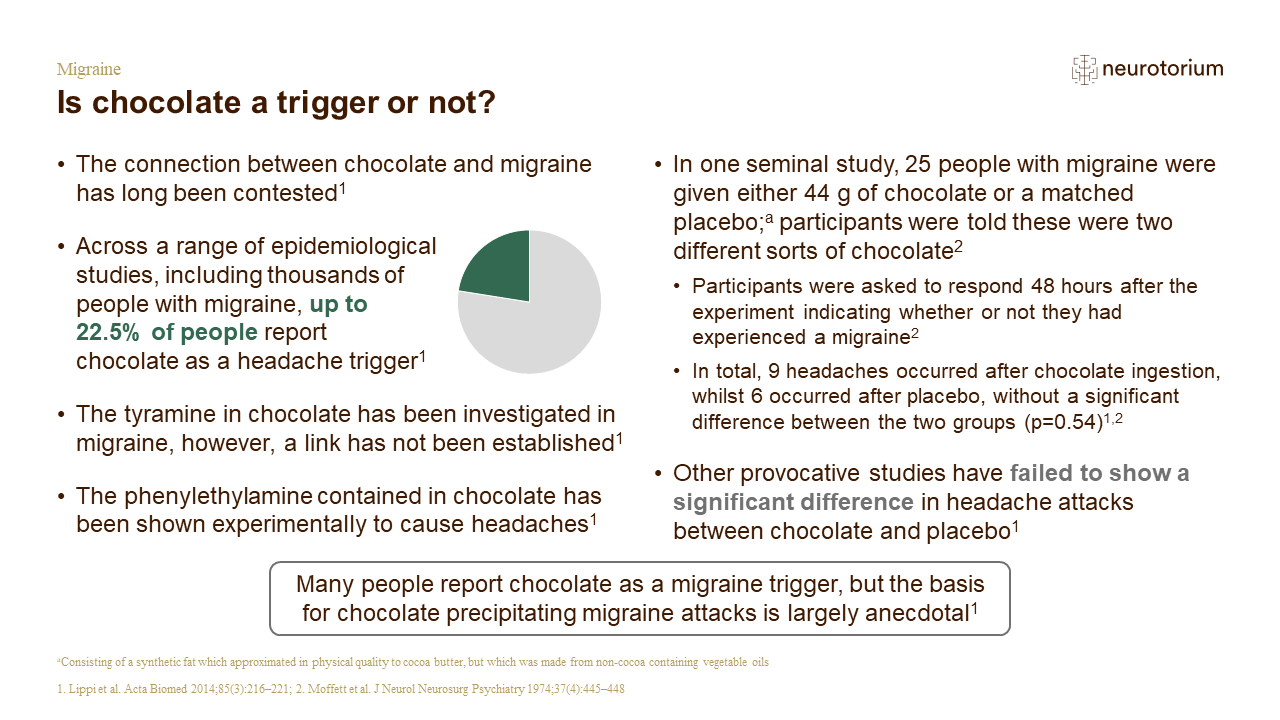
As reported on the slide, the evidence supporting a causative link between chocolate and migraine is poor.[Lippi et al., 2014; Moffett et al., 1974] To complicate the picture further, there is some research suggesting that chocolate may even be beneficial in people with migraine.[Lippi et al., 2014] In one study, an extract from cocoa beans repressed the release of CGRP from trigeminal nerves.[Abbey et al., 2008] Taken together, the evidence for chocolate as a migraine trigger is anecdotal at best, leading some to argue for further studies to establish or refute any such link, thereby providing an evidence base for the many people that currently consider chocolate as a substance to be avoided.[Lippi et al., 2014]