

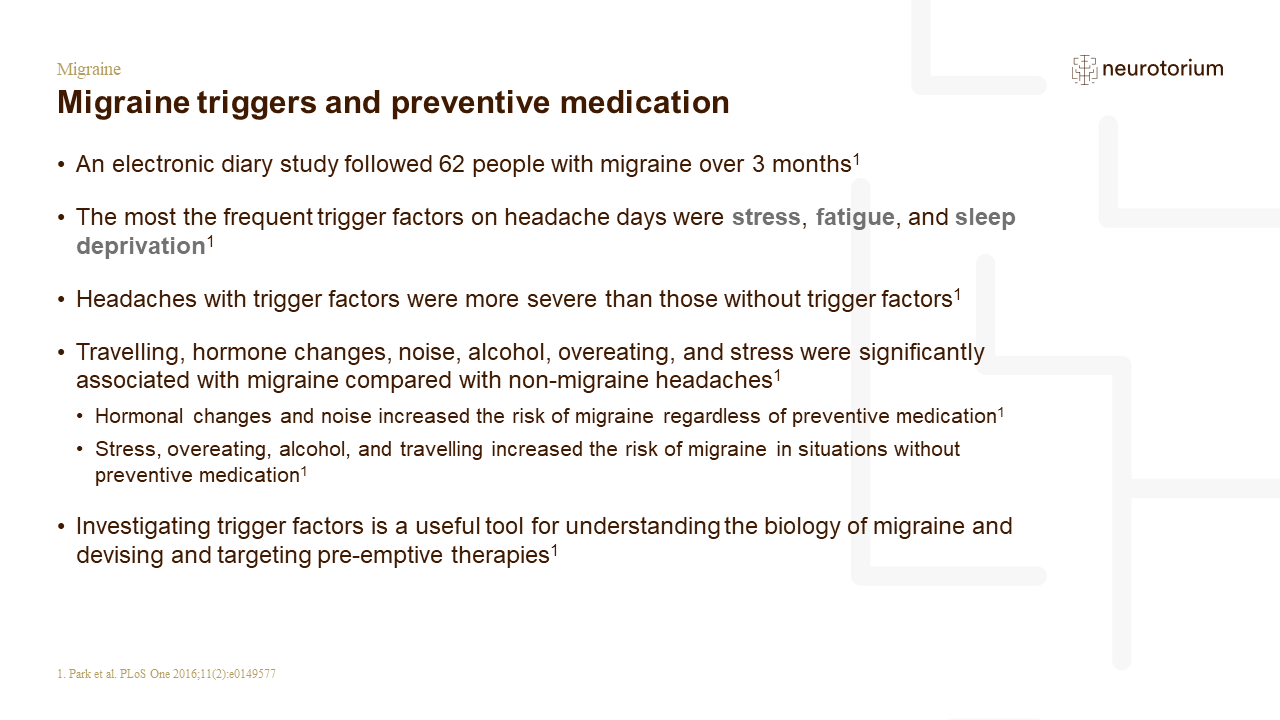
This study asked people with migraine to use a smartphone diary program to log details of trigger factors and headache characteristics over a three-month period.[Park et al., 2016] Of the 113 people recruited into the study, 62 (55%) kept the smartphone diary for at least 50% of the study period.[Park et al., 2016] Despite the apparently low adherence, when surveyed at the end of the study, all participants said they preferred the smartphone program to having to keep a paper diary.[Park et al., 2016]
Of the 62 people included in the analysis, only 2 people had migraine with aura.[Park et al., 2016] There was a median of 15 migraine days per month.[Park et al., 2016] Across the three months of the study there were 1,099 headache days reported, each with a median of 2 trigger factors.[Park et al., 2016] When the trigger factors were analysed, the most common were stress (27.6%), fatigue (20.7%), sleep deprivation (20.4%), hormonal changes (11.5%), and changes in the weather (9.9%).[Park et al., 2016] The effect of preventive medications on the link between trigger factors and emergence of headache symptoms is shown on the slide.[Park et al., 2016]