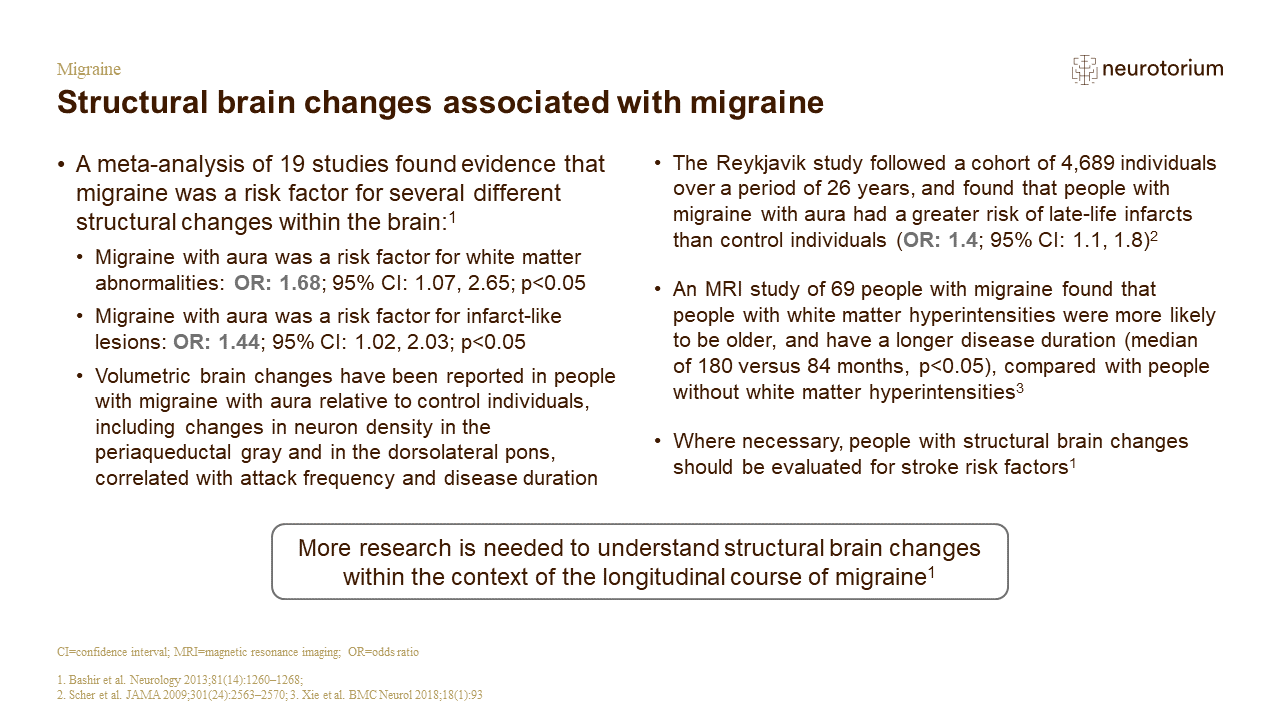
As outlined on the slide, there is evidence that structural brain changes can occur in people with migraine.[Bashir et al., 2013; Scher et al., 2009; Xie et al., 2018] An emerging body of data suggests that, compared to healthy controls, people with migraine are at an increased risk of clinically silent lesions (e.g., white matter abnormalities and infarct-like lesions), as well as volumetric changes in grey and white matter regions of the brain.[Bashir et al., 2013] Crucially, the clinical significance of these changes is not yet clear.[Bashir et al., 2013] Importantly, there appears to be a link between migraine and stroke risk – possibly because of these structural brain changes – meaning that patients should be evaluated for other stroke risk factors.[Bashir et al., 2013; Dodick, 2009]
Structural brain changes associated with migraine