

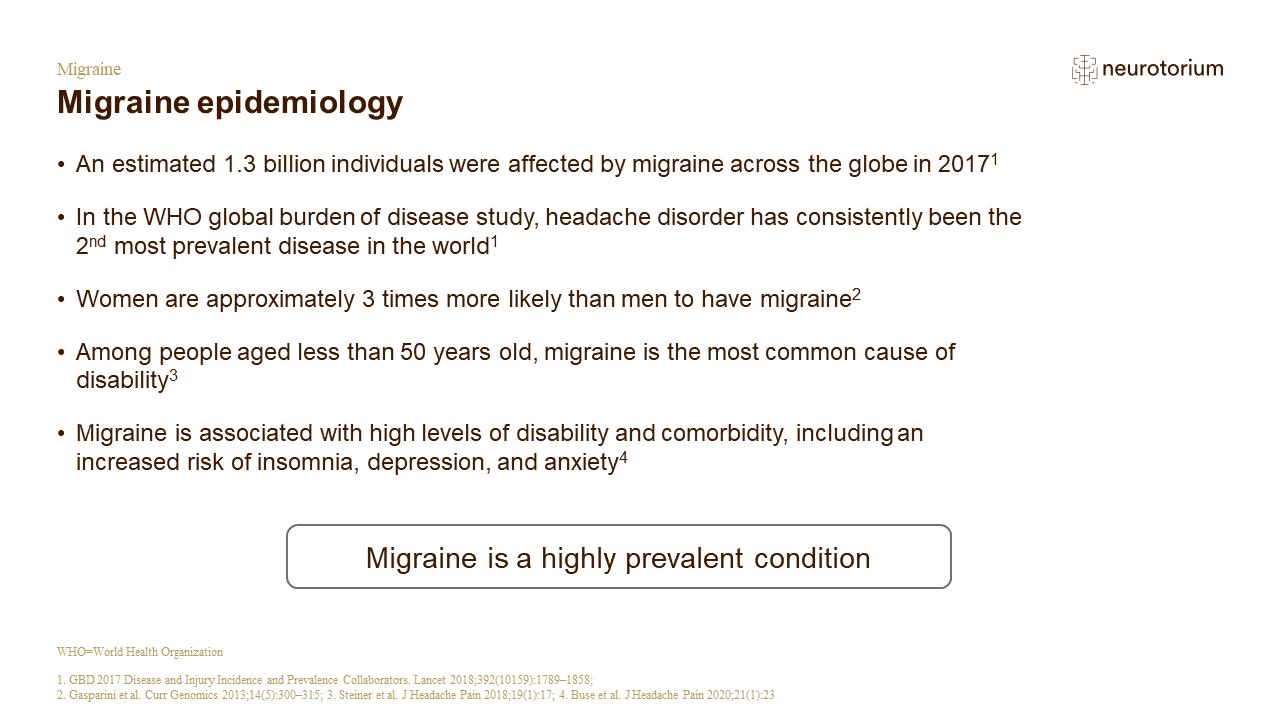
Migraine is a burdensome condition.[GBD, 2017; Steiner et al., 2018; Buse et al., 2020] The Migraine in America Symptoms and Treatment (MAST) study was an internet-based survey that questioned people with migraine about their headaches.[Buse et al., 2020] The results showed that migraine was associated with high levels of disability and comorbidity.[Buse et al., 2020] People with migraine were significantly more likely to report:[Buse et al., 2020]
- insomnia (odds ratio [OR]: 3.79, 95% confidence interval [CI]: 3.6, 4.0)
- anxiety (OR: 3.18, 95% CI: 3.0, 3.3)
- gastric ulcers or gastrointestinal bleeding (OR: 3.11, 95% CI: 2.8, 3.5)
- angina (OR: 2.64, 95% CI: 2.4, 3.0)
- epilepsy (OR: 2.33, 95% CI: 2.0, 2.8).
Other reference used on slide:
Gasparini CF, Sutherland HG, Griffiths LR. Studies on the pathophysiology and genetic basis of migraine. Curr Genomics 2013; 14 (5): 300–315.