

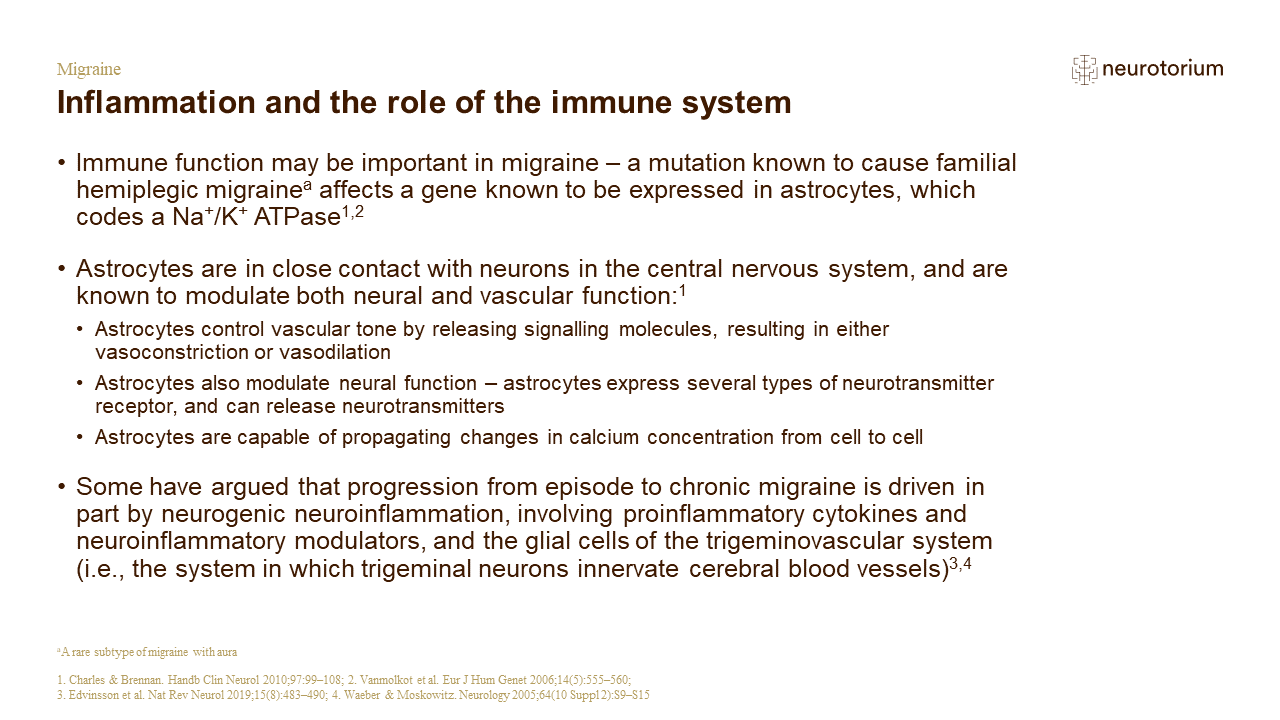
Migraine has not classically been considered an inflammatory condition, perhaps because, other than pain, migraine is not obviously associated with signs of inflammation (redness, heat, and swelling).[Waeber & Moskowitz, 2005] A question that immediately arises, then, is how to define neurogenic inflammation. Neurogenic inflammation is usually considered a phenomenon of vasodilation and of increased vascular permeability, caused by the interaction of neuropeptide mediators and proinflammatory chemicals.[Malhotra, 2016] Examples of neuropeptides that can promote neuroinflammation are CGRP, and substance P.[Malhotra, 2016]
Other references used on slide:
Charles A, Brennan KC. The neurobiology of migraine. Handb Clin Neurol 2010; 97: 99–108.