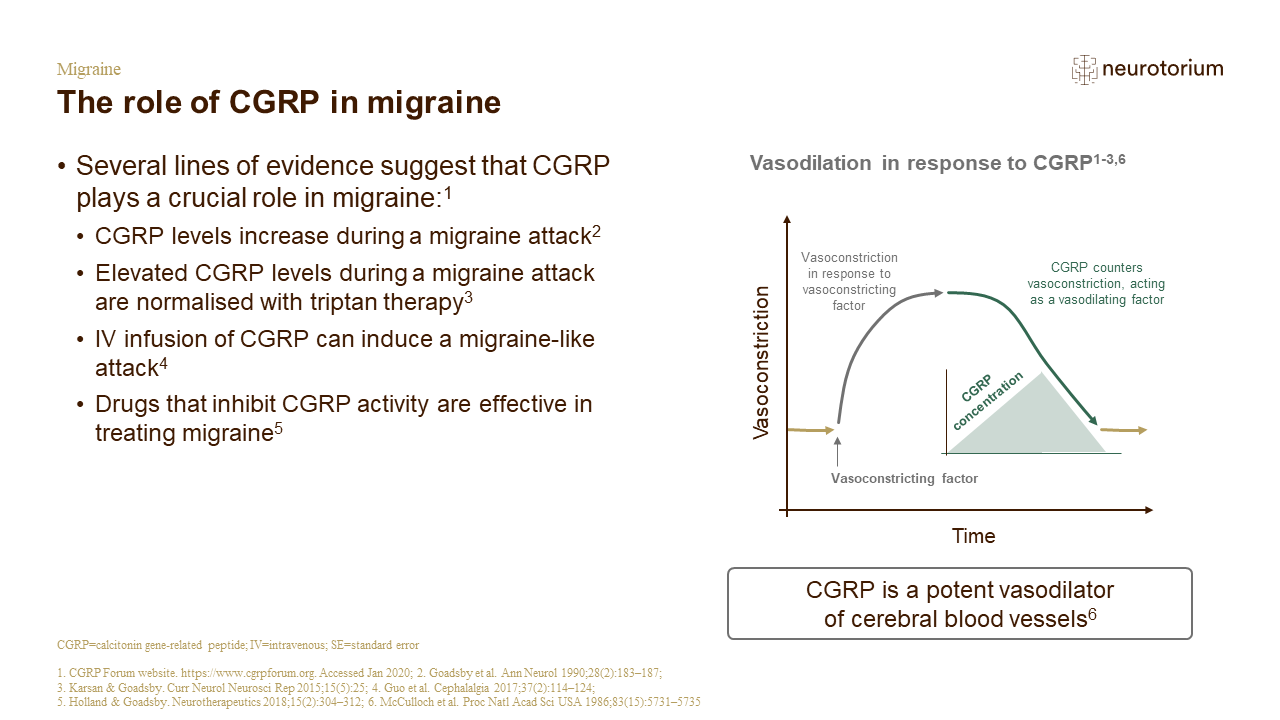
A series of seminal experiments showed that CGRP was released into the blood during the headache phase of a migraine – in people with and without aura.[Goadsby et al., 1988; Goadsby et al., 1990] The levels of other peptides, e.g., substance P or neuropeptide Y, were unaltered.[Goadsby et al., 1990]
Taken together, this evidence pointed to a central role for CGRP in the pathology of migraine, which led to interest in CGRP as a therapeutic target for migraine.
References:
Goadsby PJ, Edvinsson L, Ekman R. Vasoactive peptide release in the extracerebral circulation of humans during migraine headache. Ann Neurol 1990; 28 (2): 183–187.
Goadsby PJ, Edvinsson L, Ekman R. Release of vasoactive peptides in the extracerebral circulation of humans and the cat during activation of the trigeminovascular system. Ann Neurol 1988; 23 (2): 193–196.
Other references used on slide:
CGRP Forum website. https://www.cgrpforum.org. Accessed Jan 2020.
Guo S, Christensen AF, Liu ML, et al. Calcitonin gene-related peptide induced migraine attacks in patients with and without familial aggregation of migraine. Cephalalgia 2017; 37 (2): 114–124.
Holland PR, Goadsby PJ. Targeted CGRP small molecule antagonists for acute migraine therapy. Neurotherapeutics 2018; 15 (2): 304–312.
Karsan N, Goadsby PJ. CGRP mechanism antagonists and migraine management. Curr Neurol Neurosci Rep 2015; 15 (5): 25.
McCulloch J, Uddman R, Kingman TA, Edvinsson L. Calcitonin gene-related peptide: functional role in cerebrovascular regulation. Proc Natl Acad Sci USA 1986; 83 (15): 5731–5735.