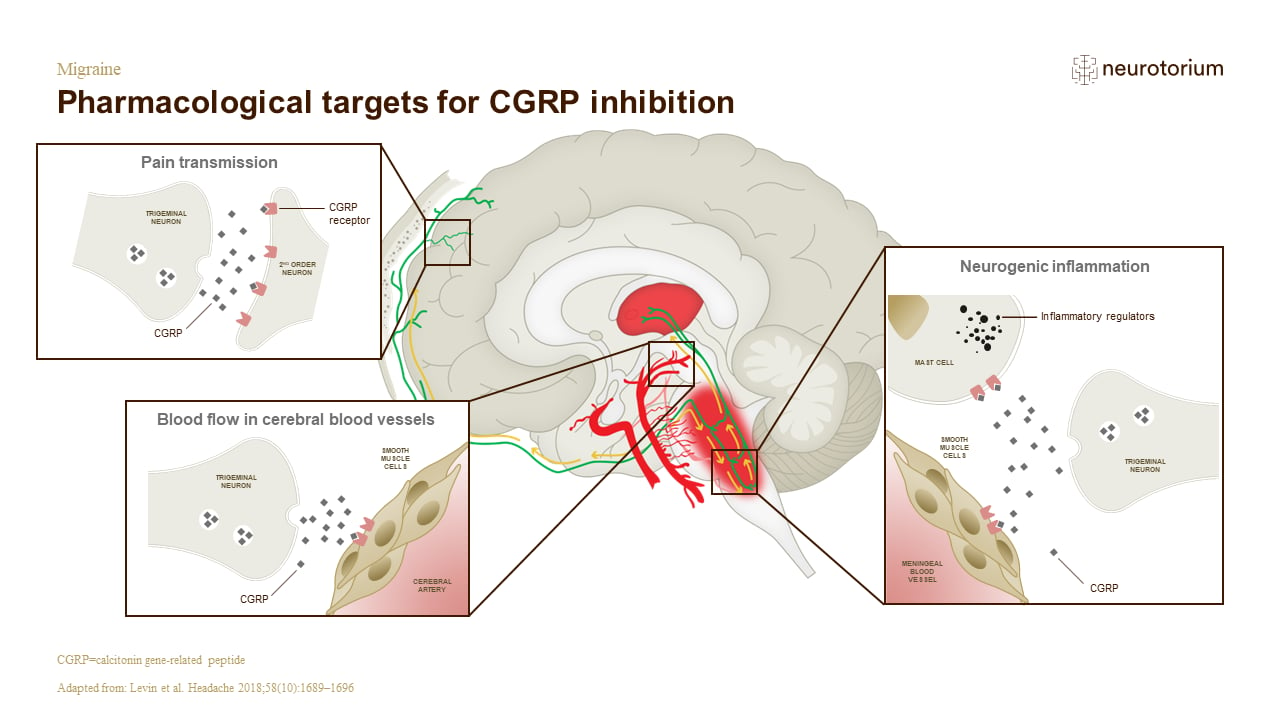
The CGRP peptide exerts its influence by binding to a CGRP receptor and activating intracellular signalling pathways, such as the cAMP (cyclic adenosine monophosphate) pathway.[Levin et al., 2018] By interacting with second-order neurons passing on a nociceptive signal, interacting with smooth muscle cells lining the cerebral artery, and interacting with inflammatory mediators such as mast cells, there are several potential points of intervention where anti-CGRP therapies might arrest migraine pathology.[Levin et al., 2018; Durham, 2004]
Pharmacological targets for CGRP inhibition