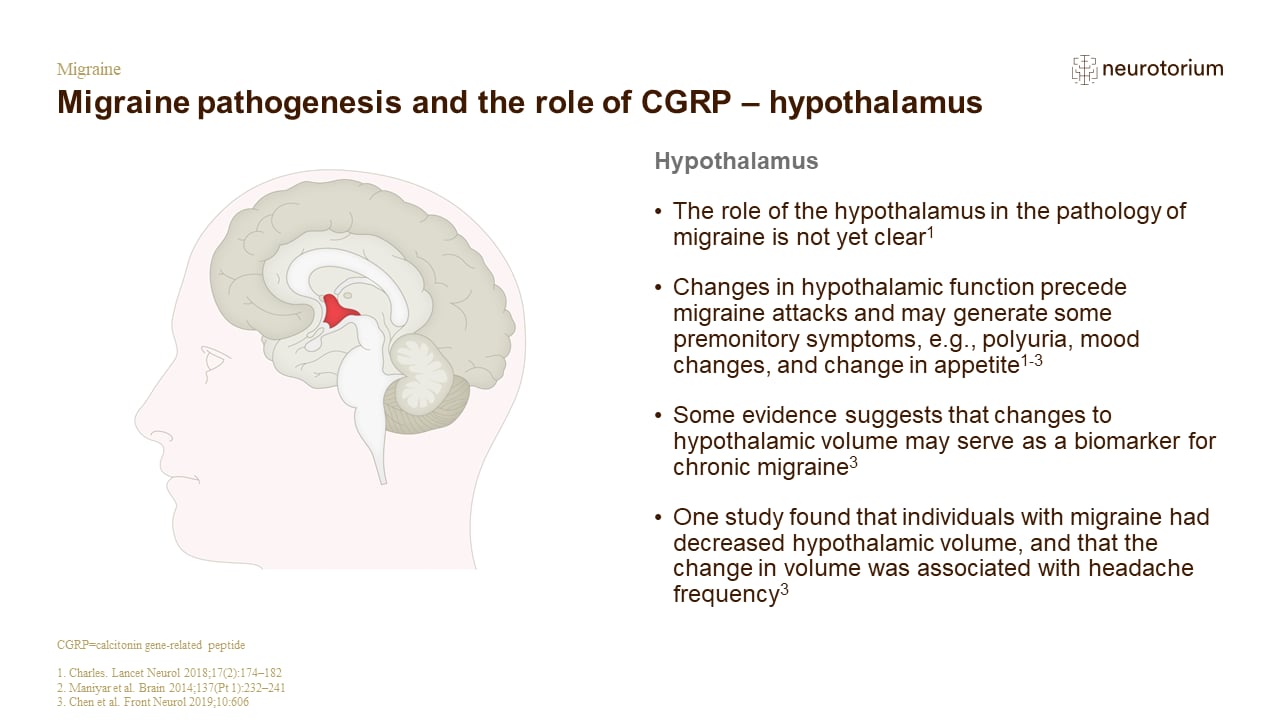
The hypothalamus is a small structure, located at the base of the forebrain, comprising several distinct nuclei.[Purves et al., 2018] It has multiple functions related to maintaining homeostasis, including controlling blood flow, regulating energy metabolism, and coordinating responses to threatening conditions via regulation of stress hormone release.[Purves et al., 2018] Although the role of the hypothalamus in migraine is unclear, some aspects of the premonitory phase suggest involvement of the hypothalamus.[Chen et al., 2019; Charles, 2018; Maniyar et al., 2014]
Migraine pathogenesis and the role of CGRP – hypothalamus