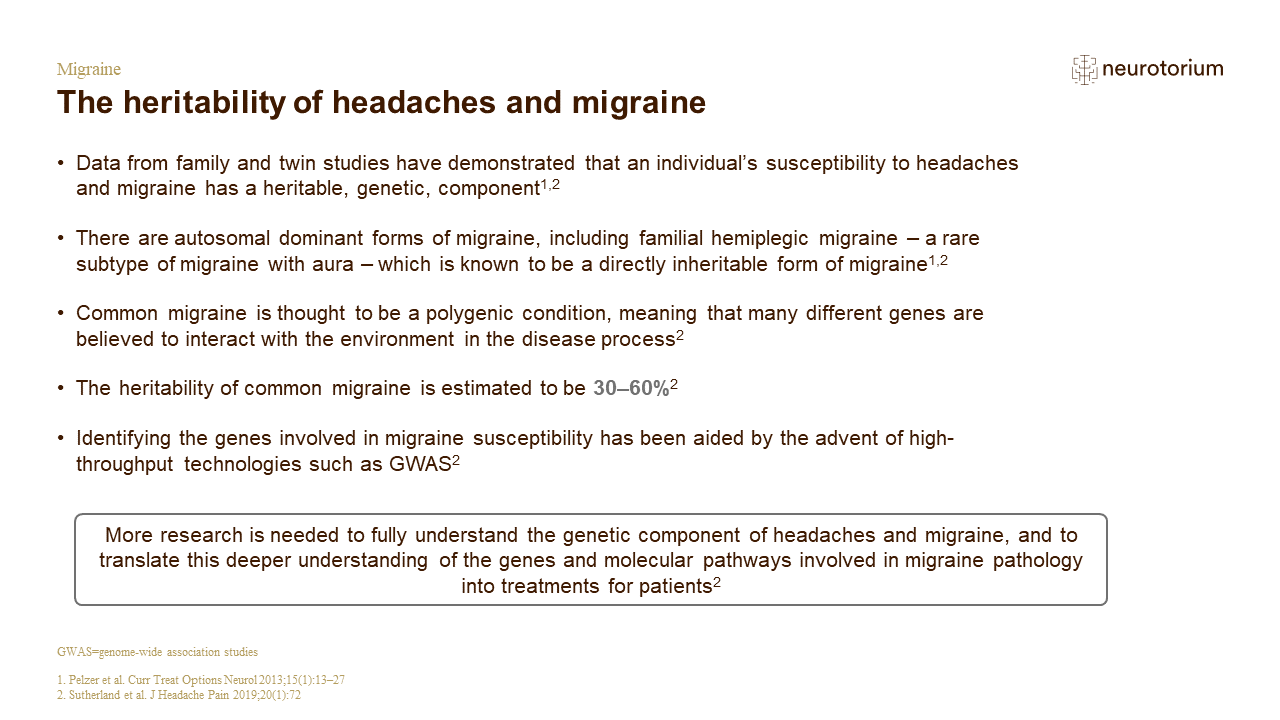
Migraine is known to have a genetic component, be it as an autosomal dominant familial trait or as so-called common migraine, as outlined on the slide.[Pelzer et al., 2013; Sutherland et al., 2019] Research focusing on known familial cases of inherited forms of migraine, using techniques such as DNA sequencing and linkage mapping, have been complimented more recently by larger-scale, hypothesis-generating techniques such as genome-wide association studies (GWAS).[Sutherland et al., 2019] As technologies become more commonly used, and sample sizes increase, more gene loci linked to migraine will be unearthed.[Sutherland et al., 2019] However, translating this progress in the genetics of migraine into understanding the pathology of, and ultimately treating, migraine will be the focus of much research.[Sutherland et al., 2019]
The heritability of headaches and migraine