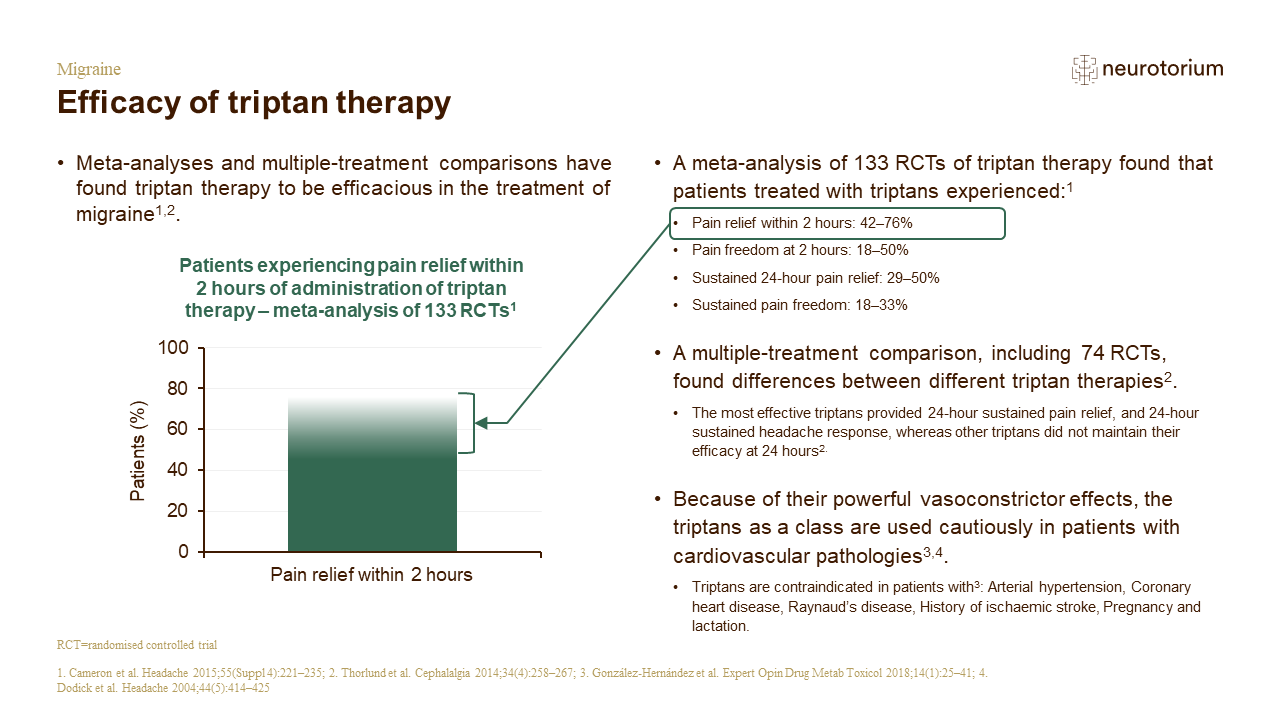
In meta-analyses, most triptan therapies were found to be more effective than NSAIDs, ergots, and certain analgesics.[Cameron et al., 2015; Thorlund et al., 2014] However, among the triptan therapies, multiple-treatment comparison modelling has revealed a hierarchy of efficacy, which means that clinicians need to balance efficacy against tolerability and costs when making prescribing decisions.[Thorlund et al., 2014] The cardiovascular adverse effects of triptans have been described as their ‘Achilles’ heel’.[González-Hernández et al., 2018] However, a consensus panel of the American Headache Society (AHS) concluded in 2004 that the use of triptans in patients at low risk of coronary artery disease is supported, without the need for prior cardiac status evaluation.[Dodick et al., 2004]
Efficacy of triptan therapy