

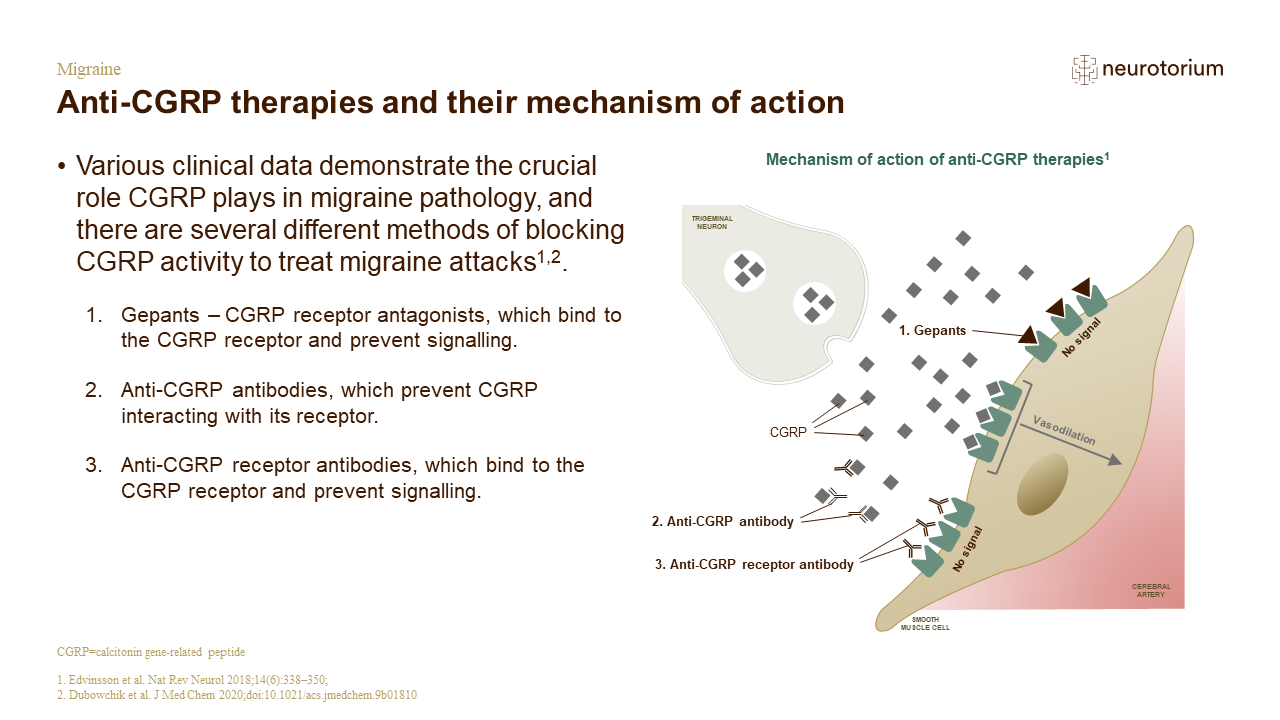
Blocking CGRP activity over the long term may be associated with risk.[Edvinsson et al., 2018] It has been hypothesised that CGRP might act as a ‘vasodilator safeguard’ during ischaemia – therefore, mild and transient ischaemic events might be worsened in individuals who receive long-term CGRP blockade treatment.[Edvinsson et al., 2018; Maassen Van Den Brink et al., 2016] Clinical studies of anti-CGRP antibodies have typically included patients of middle age, who are not at high risk of stroke or infarction, and the studies are typically not long-term studies.[Edvinsson et al., 2018; Maassen Van Den Brink et al., 2016] As with any new class of drug, monitoring various different patient populations for risks associated with long-term anti-CGRP treatment is important.[Edvinsson et al., 2018]
Other reference used on slide:
Dubowchik GM, Conway CM, Xin AW. Blocking the CGRP pathway for acute and preventive treatment of migraine: the evolution of success. J Med Chem 2020; 63 (13): 6600–6623.