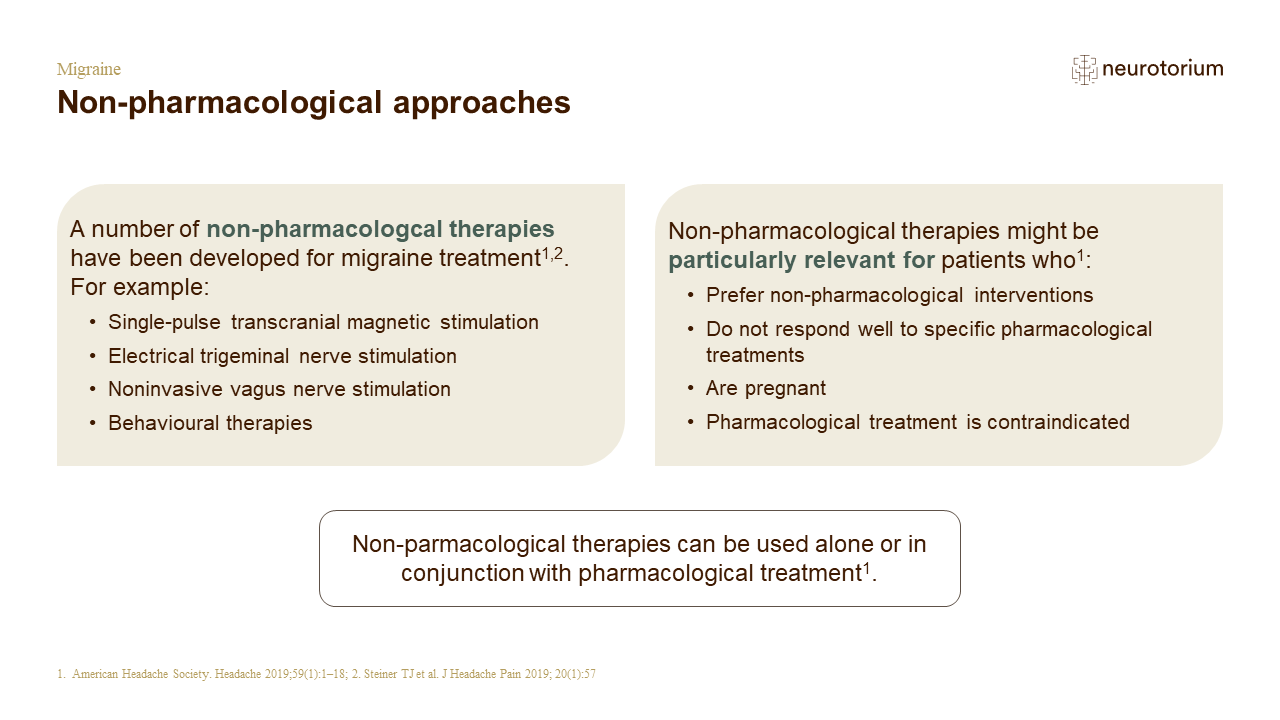
Several neuromodulatory, non-invasive devises have been approved by the U.S. Food and Drug Administration for both the preventive and acute treatment of migraine[AHS, 2019; Ashina et al., 2021]. Some evidence from RCTs indicate that behavioural therapies can have a beneficial effects on migraine. In addition, the combined effects of non-pharmacological and pharmacological therapies in conjunction, may be greater than either modality alone[AHS, 2019]. For example, an RCT with 232 individuals with migraine who received either behavioural treatment plus placebo, beta-blocker, beta-blocker plus behavioural treatment or placebo alone found that the combined effect of beta-blocker and behavioural treatment were greater than either treatment alone[Holroyd et al., 2010].
Non-pharmacological approaches