

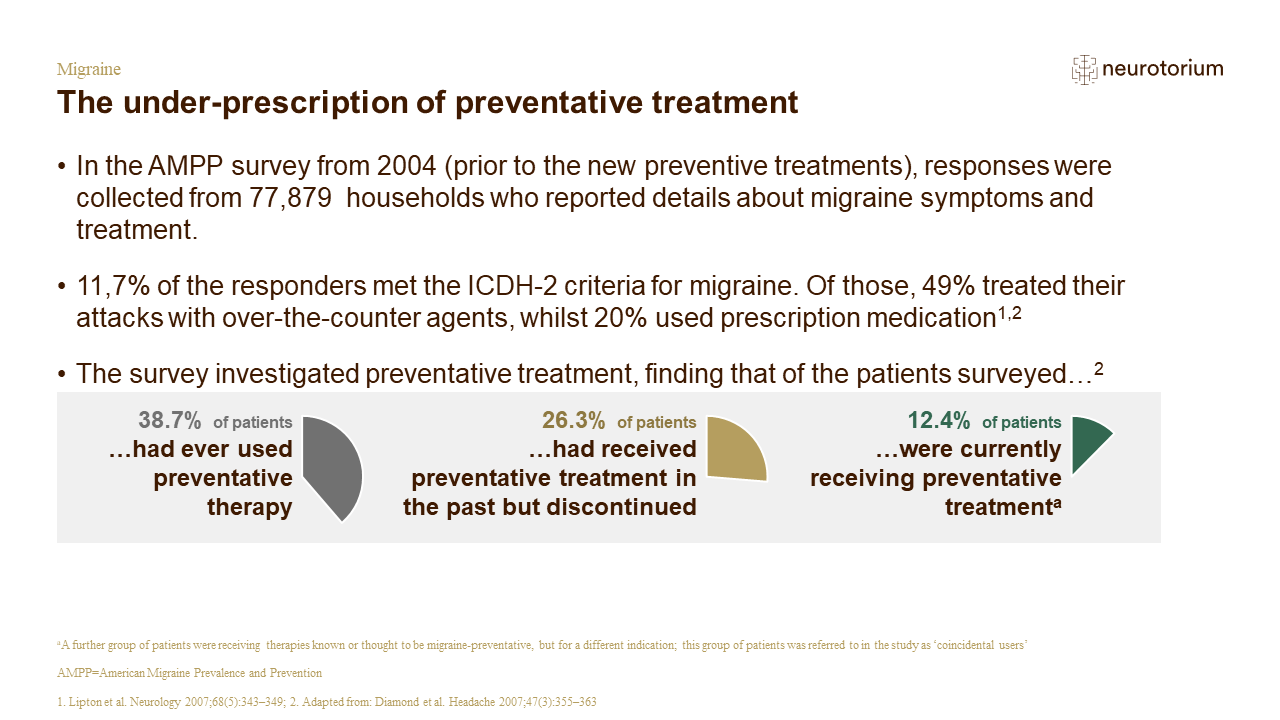
The AMPP study was undertaken in 2004 and involved posting questionnaires to 120,000 households in the USA.[Silberstein et al., 2007; AMF website] The questionnaire included questions about headache frequency, severity, medication use, and impact on daily functioning.[Silberstein et al., 2007; AMF website] During the second phase of the study, 24,000 of the respondents who reported ‘severe’ headache were contacted for a more detailed follow-up survey.[AMF website]
The results of the AMPP study showed that migraine is a frequent and under-recognised condition in the USA.[Silberstein et al., 2007] At the time the study was conducted, there were many barriers to treatment, and many patients with migraine did not receive what they perceived to be adequate treatment.[Silberstein et al., 2007] The AMPP study estimated a crude prevalence of chronic migraine of 0.25–1.92%, depending on age group, with a prevalence of 0.91% in the total sample.[Buse et al., 2012] Prevalence was highest among females, and appeared to decrease with increasing household income.[Buse et al., 2012] Among females with migraine, 7.45% had chronic migraine, and among males with migraine, 8.47% had chronic migraine.[Buse et al., 2012]
References:
American Migraine Foundation website. https://americanmigrainefoundation.org/resource-library/ampp/. Accessed February 2022.