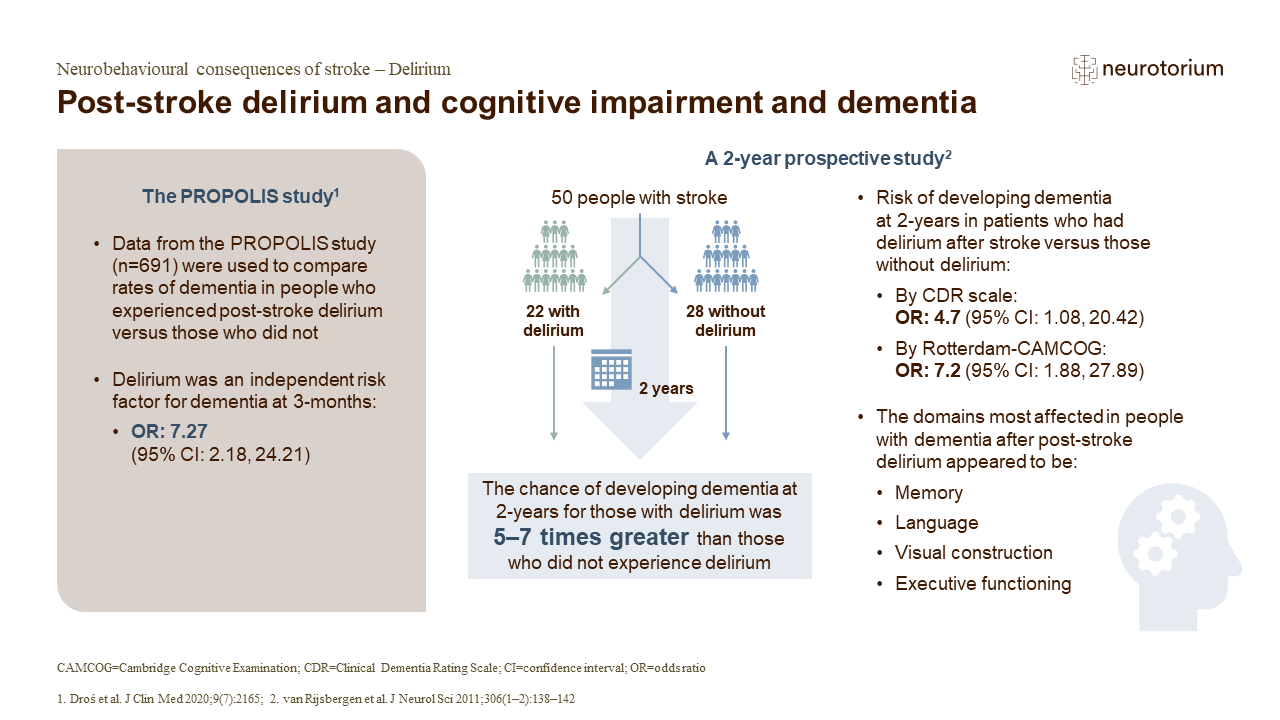
People with delirium after stroke appear to be at a higher risk of developing dementia than people who do not experience delirium.1,2 However, delirium and dementia have a complex and interconnected relationship, making studies of the effect of post-stroke delirium on later dementia challenging to design.3 The results of the PROPOLIS study suggested that delirium was associated with dementia 3-months after stroke, but not later at 1 year, a result which might reflect the short-term nature of delirium.1 More research is needed, with larger and longer-term studies, to understand the nature of the relationship between delirium and dementia after stroke.2
Post-stroke delirium and cognitive impairment and dementia