

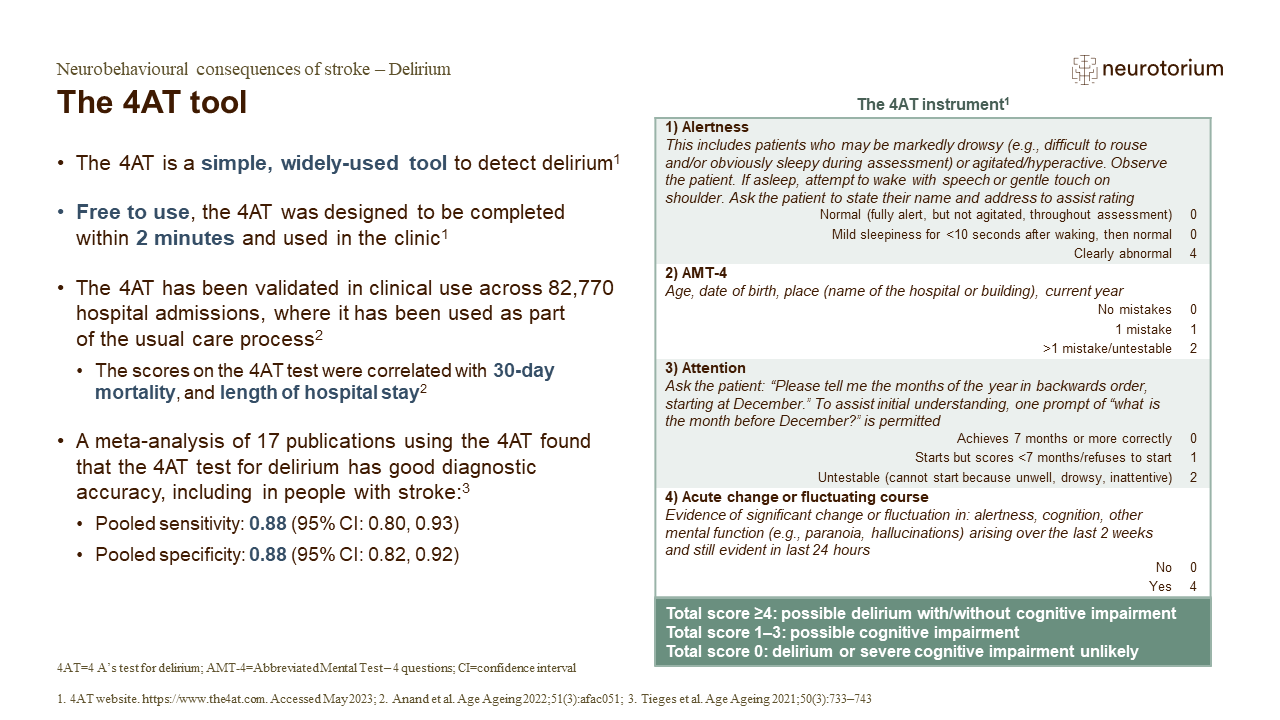
The diagnostic accuracy of the 4AT has been assessed in many studies, 17 of which have been collectively analyzed in a systematic review and meta-analysis.3 The 17 studies varied; some studies included translated or modified versions of the original 4AT tool, and were in different patient settings.3 The studies reported a range of delirium prevalence ranging from 10.5–61.9%.3 Some of these validation studies were in acute stroke.3 In a pre-planned subgroup analysis, the sensitivity and specificity of the 4AT in patients with stroke (0.86 and 0.89, respectively) were similar to the values for the total population (0.88 and 0.88, as shown on the slide).3
References:
1. 4AT website. Available at: https://www.the4at.com. Accessed May 2023.