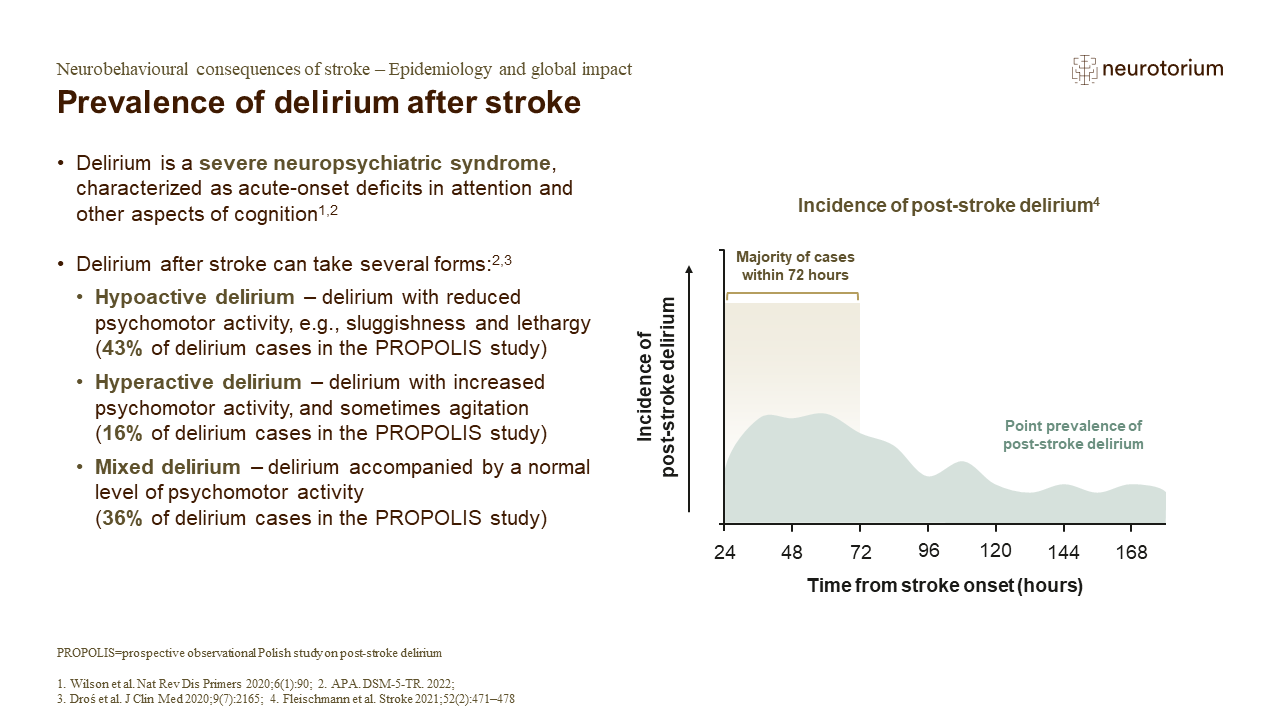
As well as acute-onset deficits in attention and other aspects of cognition, people with delirium often also experience altered arousal – ranging from reduced responsiveness to hypervigilance and severe agitation.1,2 Delirium can also include psychosis; i.e., symptoms of delusions and hallucination.2 As outlined on the slide, delirium is common after stroke.3,4
References:
1.Wilson JE, Mart MF, Cunningham C, et al. Delirium. Nat Rev Dis Primers 2020; 6 (1): 90.
2. American Psychiatric Association. Diagnostic and Statistical Manual of Mental Disorders – fifth edition – text revision. American Psychiatric Association; 2022.
3. Droś J, Kowalska K, Pasińska P, et al. Delirium post-stroke influence on post-stroke dementia (research study – part of the PROPOLIS Study). J Clin Med 2020; 9 (7): 2165.
4. Fleischmann R, Warwas S, Andrasch T, et al. Course and recognition of poststroke delirium: a prospective noninferiority trial of delirium screening tools. Stroke 2021; 52 (2): 471–478.