

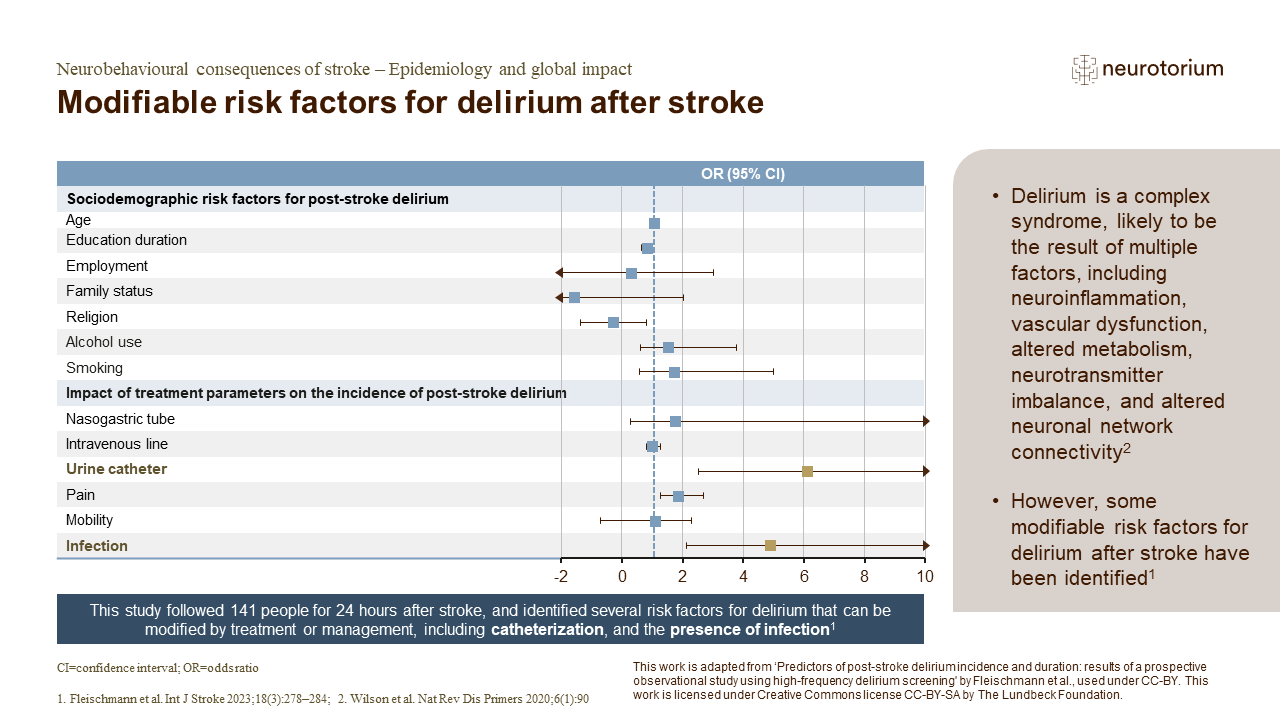
After stroke, people are particularly likely to have one or more of the known risk factors for stroke: cognitive impairment, visual impairment, infection, and dehydration.2-4 This study followed 141 patients after stroke, screening twice daily for post-stroke delirium throughout their treatment period.1 Out of the total 141 population, 55 patients developed delirium (39%).1 Several risk factors for post-stroke delirium were identified, as detailed on the slide, including catheterization and infection.1 The duration of delirium was found to be related to the presence of pain, as well as both catheterization and infection.1
2. Wilson JE, Mart MF, Cunningham C, et al. Delirium. Nat Rev Dis Primers 2020; 6 (1): 90.