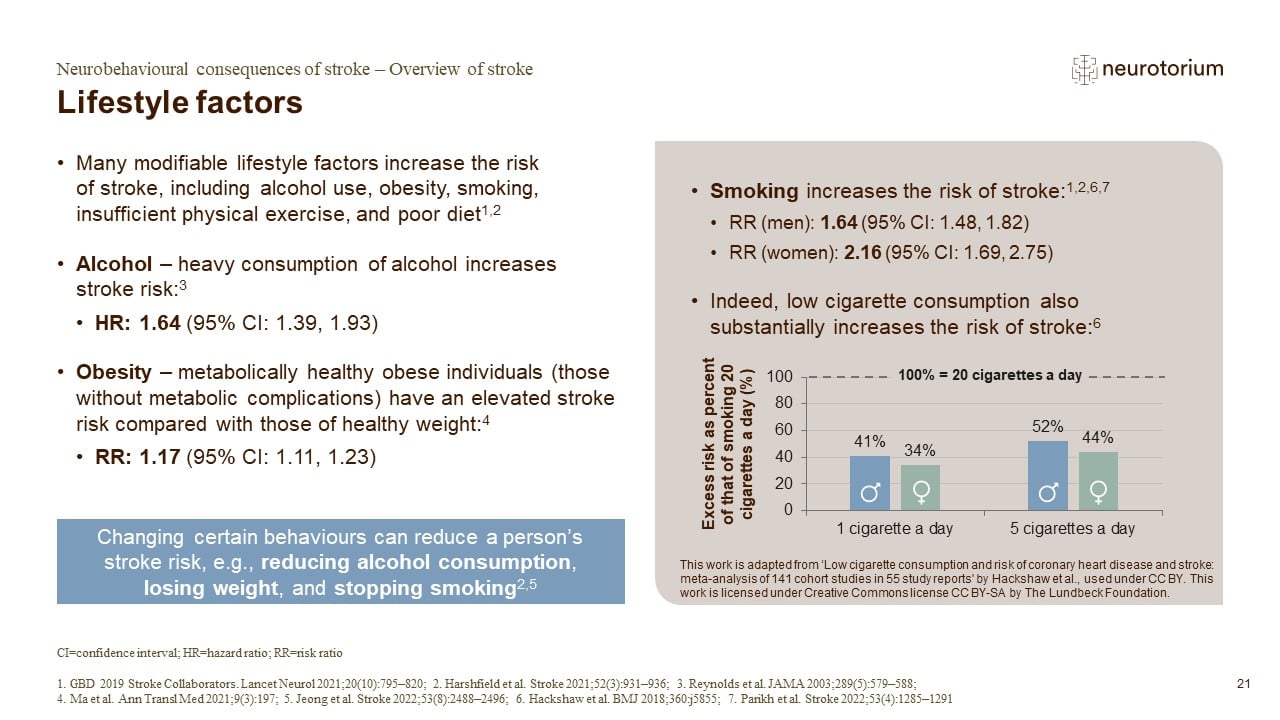
As outlined on the slide, there are several risk factors for stroke, which a person can modify in order to reduce their risk of stroke, for instance reducing alcohol consumption, improving diet, and stopping smoking.2,5
References:
1. GBD 2019 Stroke Collaborators. Global, regional, and national burden of stroke and its risk factors, 1990–2019: a systematic analysis for the Global Burden of Disease Study 2019. Lancet Neurol 2021; 20 (10): 795–820.
2. Harshfield EL, Georgakis MK, Malik R, et al. Modifiable lifestyle factors and risk of stroke: a Mendelian randomization analysis. Stroke 2021; 52 (3): 931–936.
3. Reynolds K, Lewis B, Nolen JD, et al. Alcohol consumption and risk of stroke: a meta-analysis. JAMA 2003; 289 (5): 579–588.
4. Ma LZ, Sun FR, Wang ZT, et al. Metabolically healthy obesity and risk of stroke: a meta-analysis of prospective cohort studies. Ann Transl Med 2021; 9 (3): 197.
5. Jeong SM, Lee HR, Han K, et al. Association of change in alcohol consumption with risk of ischemic stroke. Stroke 2022; 53 (8): 2488–2496.
6. Hackshaw A, Morris JK, Boniface S, et al. Low cigarette consumption and risk of coronary heart disease and stroke: meta-analysis of 141 cohort studies in 55 study reports. BMJ 2018; 360: j5855.
7. Parikh NS, Parasram M, White H, et al. Smoking cessation in stroke survivors in the United States: a nationwide analysis. Stroke 2022; 53 (4): 1285–1291.