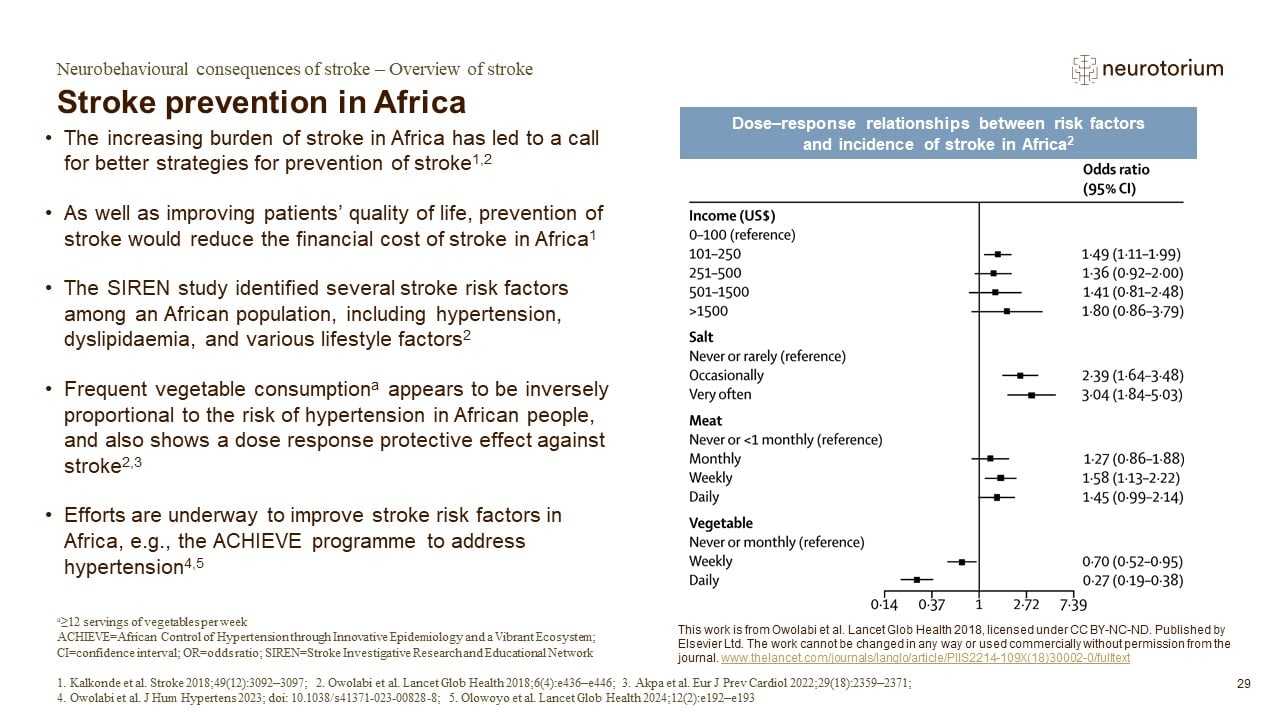
The Stroke Investigative Research and Educational Network (SIREN) study was a large multi-centre study over 15 sites in Nigeria and Ghana.2 The study shown on the slide was part of the SIREN study, using data from 2,118 case–control pairs to test for associations between various risk factors and incidence of stroke.2 Several risk factors were associated with stroke, both haemorrhagic and ischaemic stroke.2 Interventions to address these risk factors are needed across Africa, to help prevent the incidence of stroke and reduce the burden on patients and healthcare systems.1,2
References:
1. Kalkonde YV, Alladi S, Kaul S, Hachinski V. Stroke prevention strategies in the developing world. Stroke 2018; 49 (12): 3092–3097.
2. Owolabi MO, Sarfo F, Akinyemi R, et al.; SIREN Team; as part of H3Africa Consortium. Dominant modifiable risk factors for stroke in Ghana and Nigeria (SIREN): a case-control study. Lancet Glob Health 2018; 6 (4): e436–e446.
3. Akpa OM, Okekunle AP, Asowata OJ, et al. Frequent vegetable consumption is inversely associated with hypertension among indigenous Africans. Eur J Prev Cardiol 2022; 29 (18): 2359–2371.
4. Owolabi M, Olowoyo P, Mocumbi A, et al. African Control of Hypertension through Innovative Epidemiology and a Vibrant Ecosystem (ACHIEVE): novel strategies for accelerating hypertension control in Africa. J Hum Hypertens 2023.
5. Olowoyo P, Barango P, Moran A, et al.; ACHIEVE. Priorities to reduce the burden of hypertension in Africa through ACHIEVE. Lancet Glob Health 2024; 12 (2): e192–e193.