

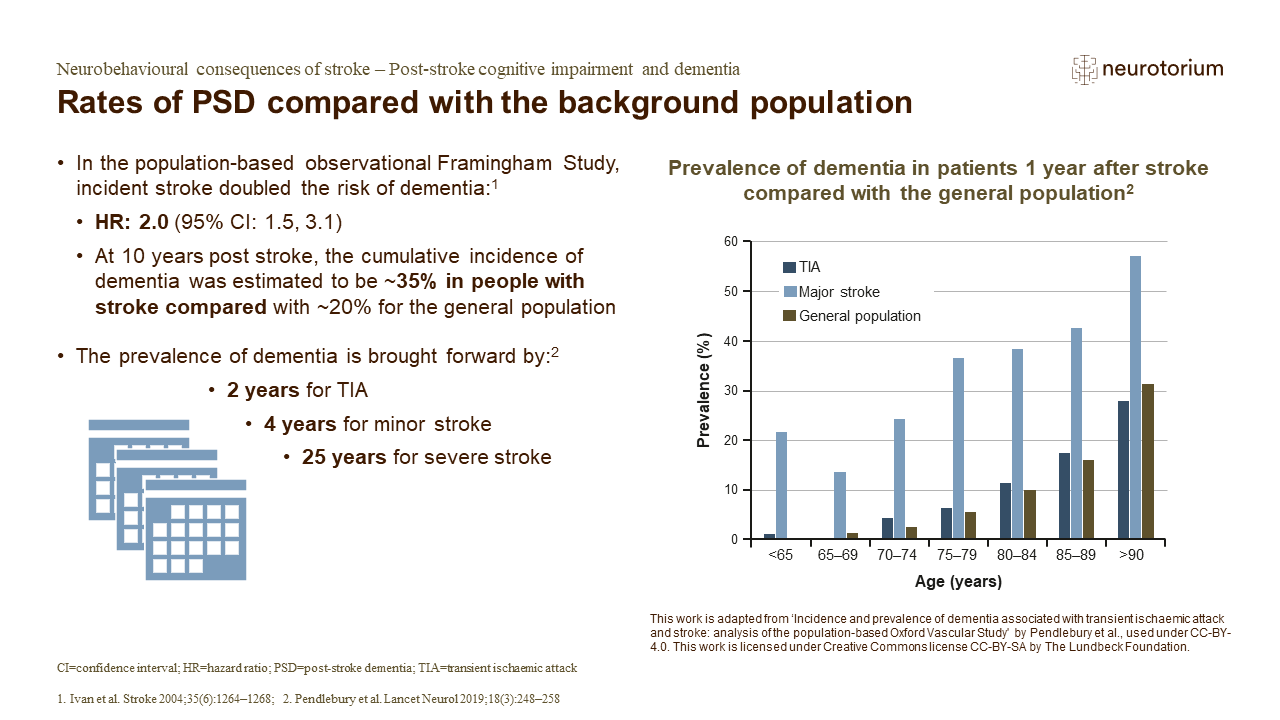
The Framingham study is an observational study that began monitoring people for incident stroke in the 1950s.1 The subset of patients used for the analysis presented on the slide included 212 people who were dementia free in 1982, experienced a stroke after this date, and their risk of developing dementia thereafter was compared with 1,060 control individuals.1 Stroke doubled the risk of developing dementia, after adjustment for age, sex, education, and exposure to certain risk factors.1
References:
1. Ivan CS, Seshadri S, Beiser A, et al. Dementia after stroke: the Framingham Study. Stroke 2004; 35 (6): 1264–1268.
2. Pendlebury ST, Rothwell PM; Oxford Vascular Study. Incidence and prevalence of dementia associated with transient ischaemic attack and stroke: analysis of the population-based Oxford Vascular Study. Lancet Neurol 2019; 18 (3): 248–258.