

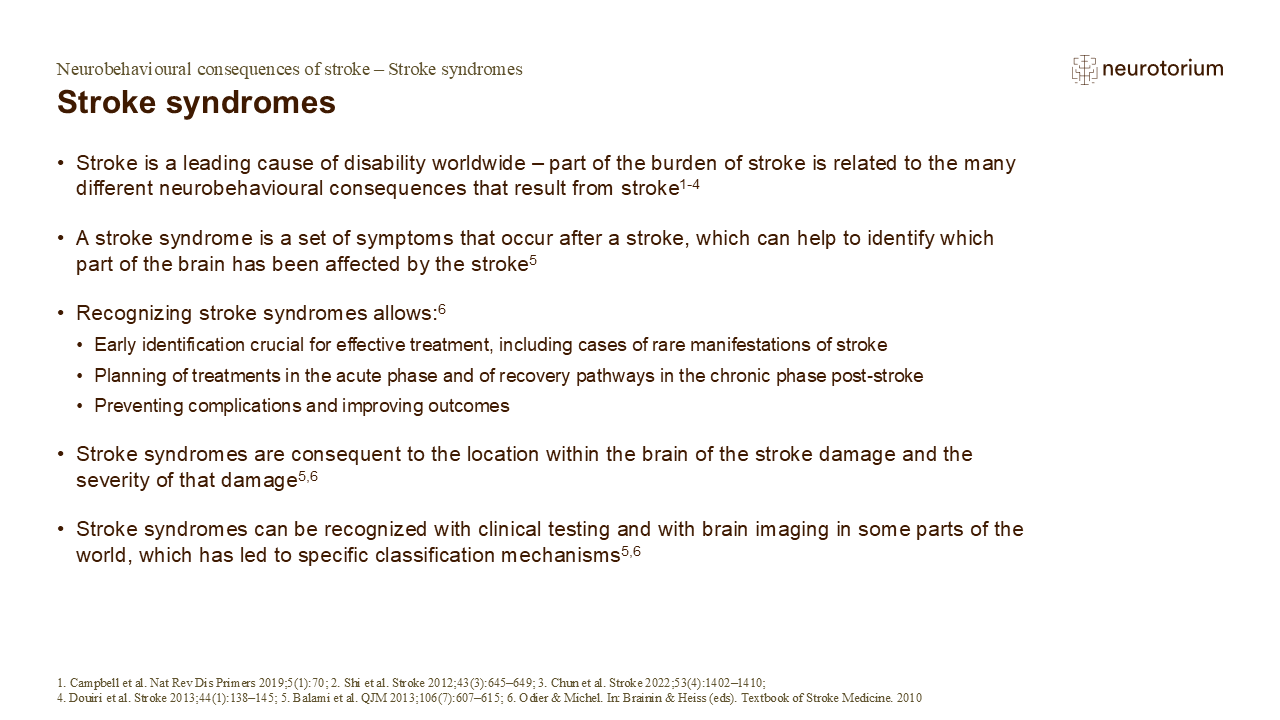
Depending on the severity and the location within the brain of the stroke pathology,1 the damage caused by a stroke can lead to severe functional, sensory, and motor symptoms,1,6 as well as neurobehavioural consequences, including neuropsychiatric symptoms (depression, anxiety, apathy, and fatigue), delirium, and cognitive impairment and dementia.2-4 These neurobehavioural consequences can have a considerable impact on the quality of life of the patient.2-4
There are a number of relatively well-defined stroke syndromes, defined based on a characteristic set of clinical presentations.5,6 Being able to recognize stroke syndromes is still an important clinical skill, because some different stroke syndromes have different indications for treatment, and some can be acutely life threatening.5
References:
1. Campbell BCV, De Silva DA, Macleod MR, et al. Ischaemic stroke. Nat Rev Dis Primers 2019; 5 (1): 70.
2. Shi Q, Presutti R, Selchen D, Saposnik G. Delirium in acute stroke: a systematic review and meta-analysis. Stroke 2012; 43 (3): 645–649.
3. Chun HY, Ford A, Kutlubaev MA, et al. Depression, anxiety, and suicide after stroke: a narrative review of the best available evidence. Stroke 2022; 53 (4): 1402–1410.
4. Douiri A, Rudd AG, Wolfe CD. Prevalence of poststroke cognitive impairment: South London stroke register 1995–2010. Stroke 2013; 44 (1): 138–145.
5. Balami JS, Chen RL, Buchan AM. Stroke syndromes and clinical management. QJM 2013; 106 (7): 607–615.
6. Odier C, Michel P. Common stroke syndromes. In: Brainin M, Heiss WD (eds). Textbook of Stroke Medicine. Cambridge University Press, 2010. Pg. 121–134.