

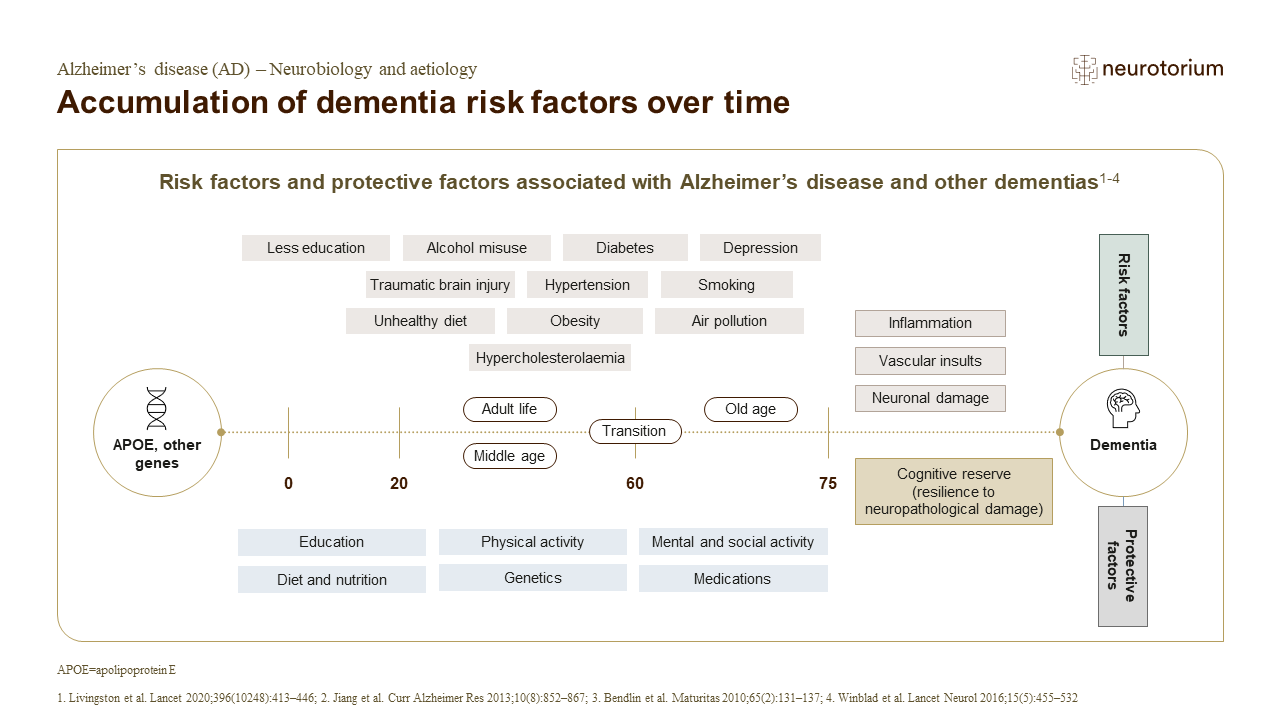
Maintaining good physical health in individuals with dementia is important for cognition.1 In early life (i.e., <45 years), lack of education has been associated with an increased risk of dementia.1 In middle life (i.e., 45–65 years), and not necessarily in later life (i.e., >65 years), the presence of hypertension, obesity, hearing loss, traumatic brain injury, and alcohol use are associated with an increased risk of dementia.1 During later life (i.e., >65 years), the risk of dementia increases with factors such as smoking, depression, social isolation, physical inactivity, diabetes, and air pollution.1 For some risk factors, the pattern of risk, and the individual’s physical and mental health may determine the impact on cognitive decline.1 Recommendations suggest prioritizing education in early life, reducing risk of serious brain trauma in relevant settings, and the development of policies to reduce hypertension and air pollution, and increase social, cognitive, and physical activity in the entire population.1
Many risk factors for dementia cluster around inequalities, with a higher risk in Black, Asian, and minority ethnic groups, and in vulnerable individuals.1 Dementia is increasing more in low-income and middle-income countries compared with high-income countries due to the ageing population and a higher frequency of potentially modifiable risk factors.1 Tackling the risk of dementia associated with inequalities will involve promotion of health, as well as societal action to improve the circumstances in which people live.1