

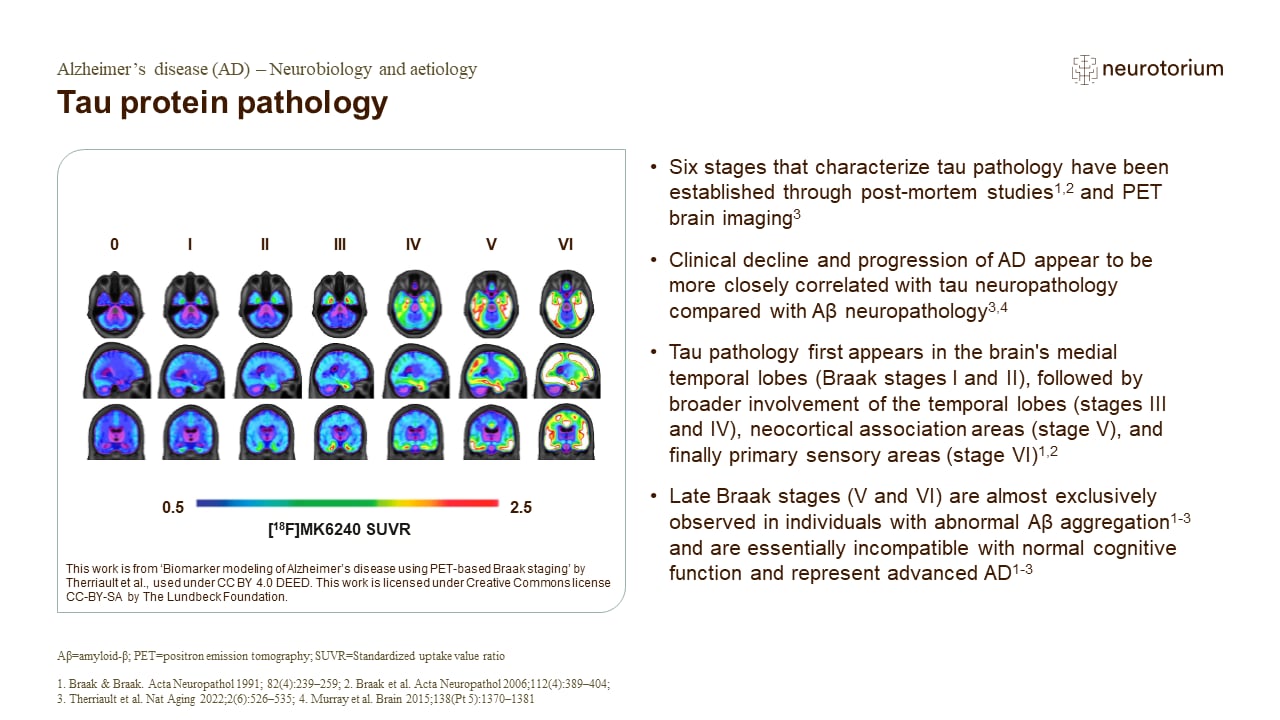
The biology and pathophysiology of tau is complex, requiring different types of tau biomarkers.5 Tau biomarkers include tau-PET and CSF concentrations of p-tau.5 Evidence of p-tau at specific sites had led to the idea that specific tau phosphorylation signatures are associated with specific disease stages.5 CSF concentrations of Aß/p-Tau , and PET measures of insoluble Aß and tau NFTs represent different aspects of AD pathology.5 CSF biomarkers indicate the concentration of abnormal proteins that have leaked from brain tissue into the CSF.5 In contrast, PET biomarkers bind with high sensitivity and selectivity to insoluble forms of AD pathophysiology such as Aß plaques or tau NFTs.5 CSF biomarkers are therefore considered as measures of a pathophysiological process associated with specific neuropathological abnormalities within the brain, while PET biomarkers are thought to show the accumulation of pathology over time.5
References:
1.Braak H, Braak E. Neuropathological stageing of Alzheimer-related changes. Acta Neuropathol 1991; 82 (4): 239–259.