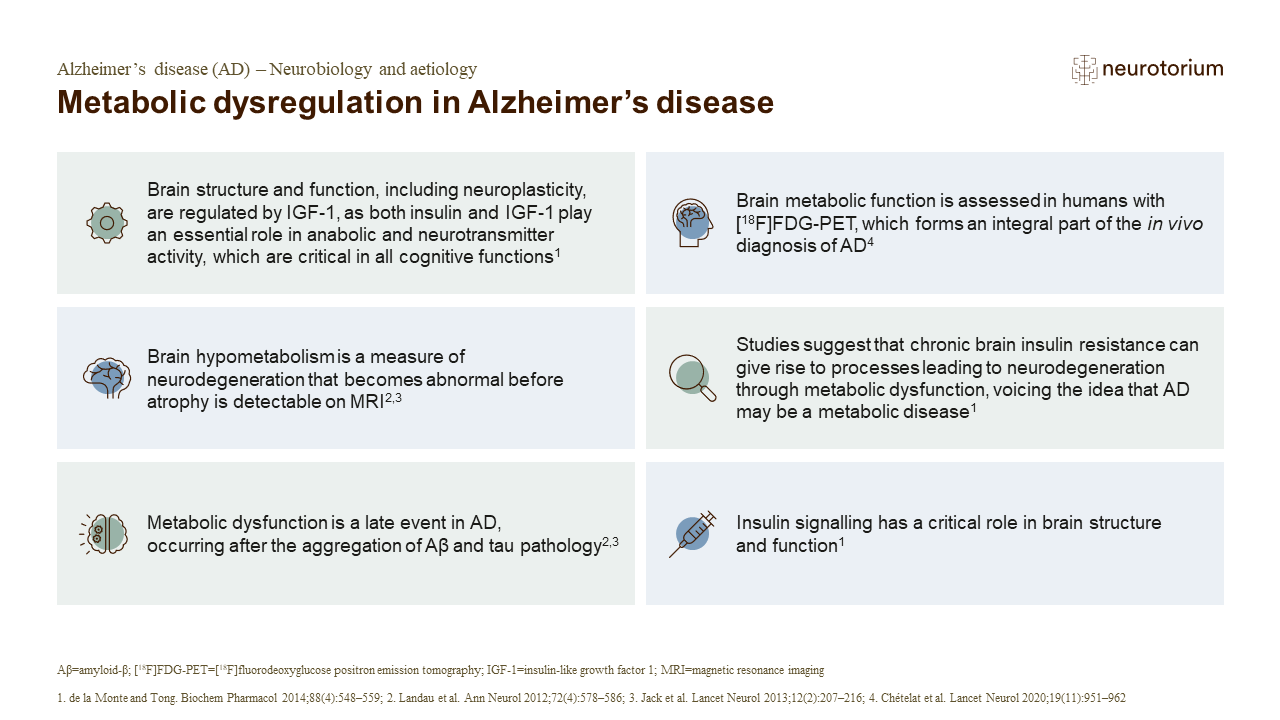
AD as a metabolic disease of the brain is associated with insulin and IGF resistance and deficiency, with effects and consequences consistent with those of diabetes mellitus.1 Brain insulin and IGF resistance results in a cascade of changes that are driven by an increase in oxidative stress, neuroinflammation, disrupted cell survival, impaired mitochondrial function, dysregulated lipid metabolism, and endoplasmic reticulum (ER) stress.1
References:
1.de la Monte SM, Tong M. Brain metabolic dysfunction at the core of Alzheimer’s disease. Biochem Pharmacol 2014; 88 (4): 548–559.
2.Landau SM, Mintun MA, Joshi AD, et al; Alzheimer’s Disease Neuroimaging Initiative. Amyloid deposition, hypometabolism, and longitudinal cognitive decline. Ann Neurol 2012; 72 (4): 578–586.
3.Jack CR Jr, Knopman DS, Jagust WJ, et al. Tracking pathophysiological processes in Alzheimer’s disease: an updated hypothetical model of dynamic biomarkers. Lancet Neurol 2013; 12 (2): 207–216.
4.Chételat G, Arbizu J, Barthel H, et al. Amyloid-PET and 18F-FDG-PET in the diagnostic investigation of Alzheimer’s disease and other dementias. Lancet Neurol 2020; 19 (11): 951–962.