

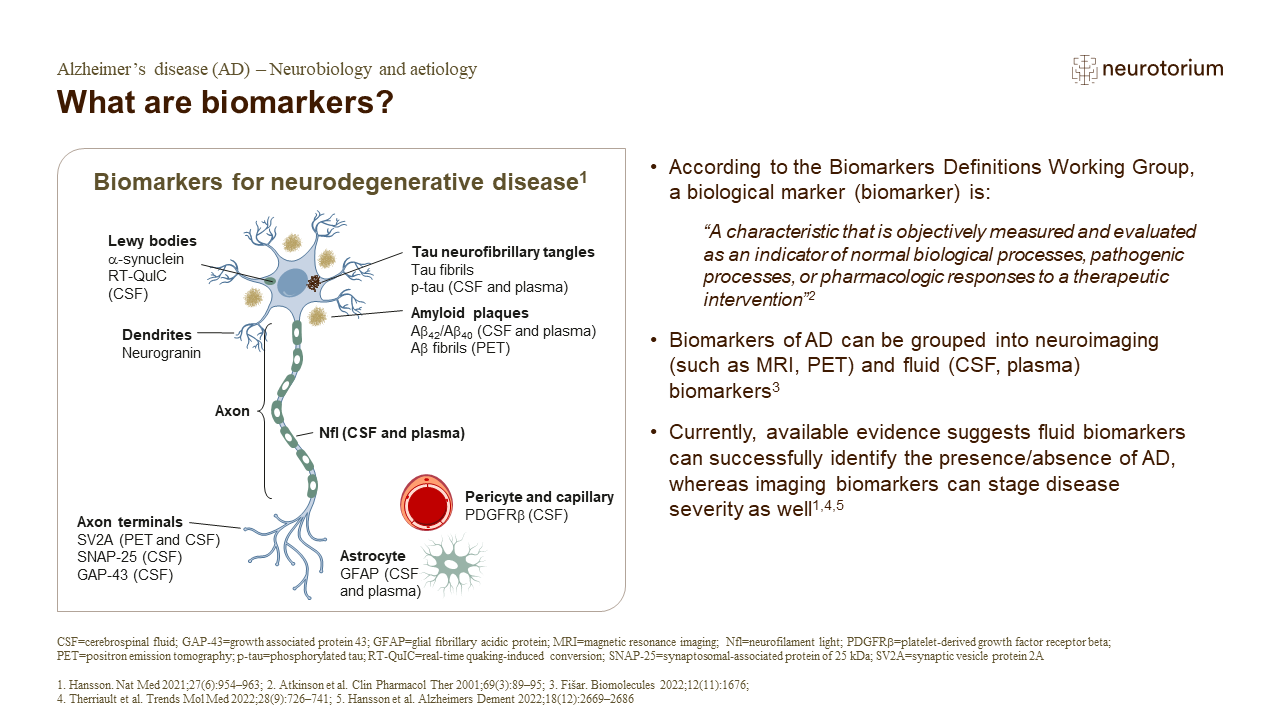
Biomarkers of neurodegenerative disease are required for timely and accurate diagnosis, as well as the optimization of treatment strategies.1 Misdiagnosis can result in insufficient treatment and care, and unnecessary investigations owing to diagnostic ambiguity.1,6 Often, patients seek medical attention with mild cognitive impairment (MCI), an aetiologically heterogeneous condition, which occurs earlier in AD progression, and is characterized by cognitive impairment without functional impairment sufficient for a dementia diagnosis.1 Approximately 30–50% of patients with MCI have developing AD; however, without biomarkers, the underlying aetiology is difficult to determine.1 There is an unmet need for a screening modality that targets the biomarker pathophysiology of AD-modifying therapies.7 Currently emerging blood-based biomarkers provide the potential for cost-effective and multi-tiered approaches, which may be used in primary care.7 A multi-tiered diagnostic process that includes a blood test in primary care, would increase availability to disease-modifying therapies, and would exclude patients who do not need to undergo the expensive and invasive procedures.7
References:
1.Hansson O. Biomarkers for neurodegenerative diseases. Nat Med 2021; 27 (6): 954–963.