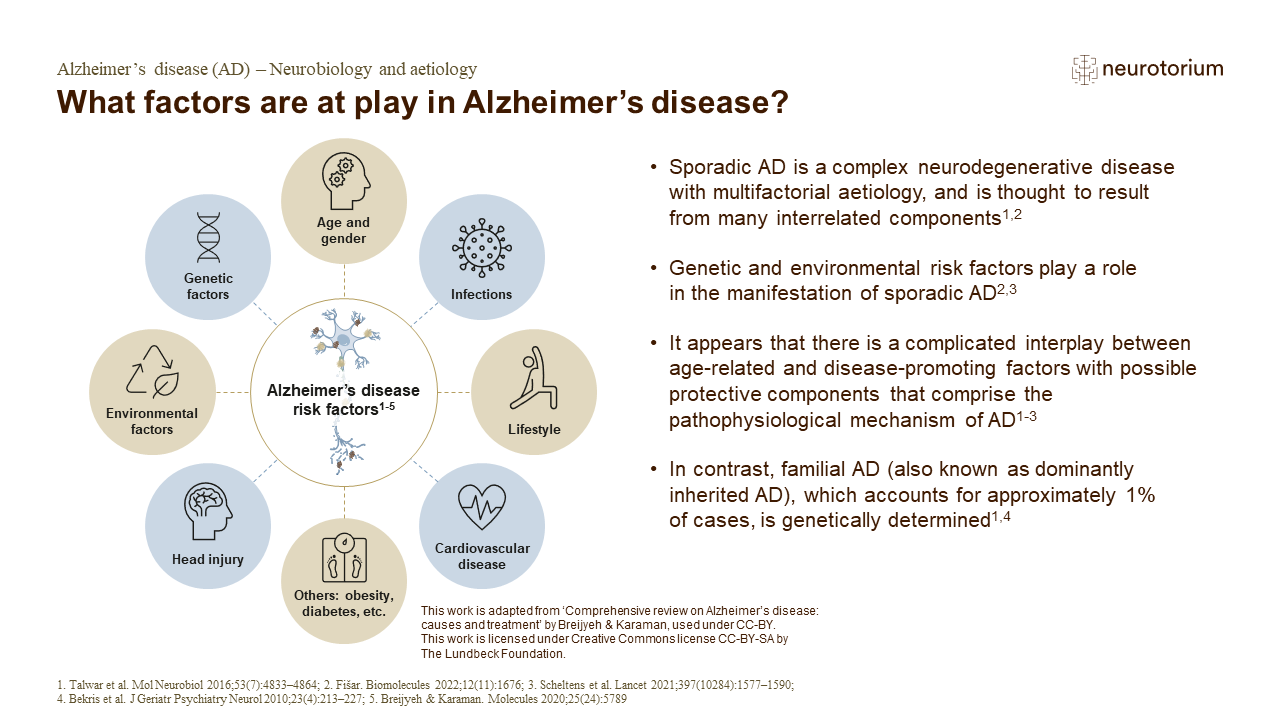
While the most prominent risk factor for AD is increasing age, the disease develops as a result of several risk factors that converge.2 Environmental factors such as traumatic brain injury, ischemia, hypoxia, neurotoxins, infections, lifestyle, metabolic parameters, and comorbid cardiovascular disease also contribute to the development of dementia.2,5
References on slide:
1.Talwar P, Sinha J, Grover S, et al. Dissecting complex and multifactorial nature of Alzheimer’s disease pathogenesis: a clinical, genomic, and systems biology perspective. Mol Neurobiol 2016; 53 (7): 4833–4864.
2.Fišar Z. Linking the amyloid, tau, and mitochondrial hypotheses of Alzheimer’s Disease and identifying promising drug targets. Biomolecules 2022; 12 (11): 1676.
3.Scheltens P, De Strooper B, Kivipelto M, et al. Alzheimer’s disease. Lancet 2021; 397 (10284): 1577–1590.
4.Bekris LM, Yu CE, Bird TD, Tsuang DW. Genetics of Alzheimer disease. J Geriatr Psychiatry Neurol 2010; 23 (4): 213–227.
5.Breijyeh Z, Karaman R. Comprehensive review on Alzheimer’s disease: causes and treatment. Molecules 2020; 25 (24): 5789.