

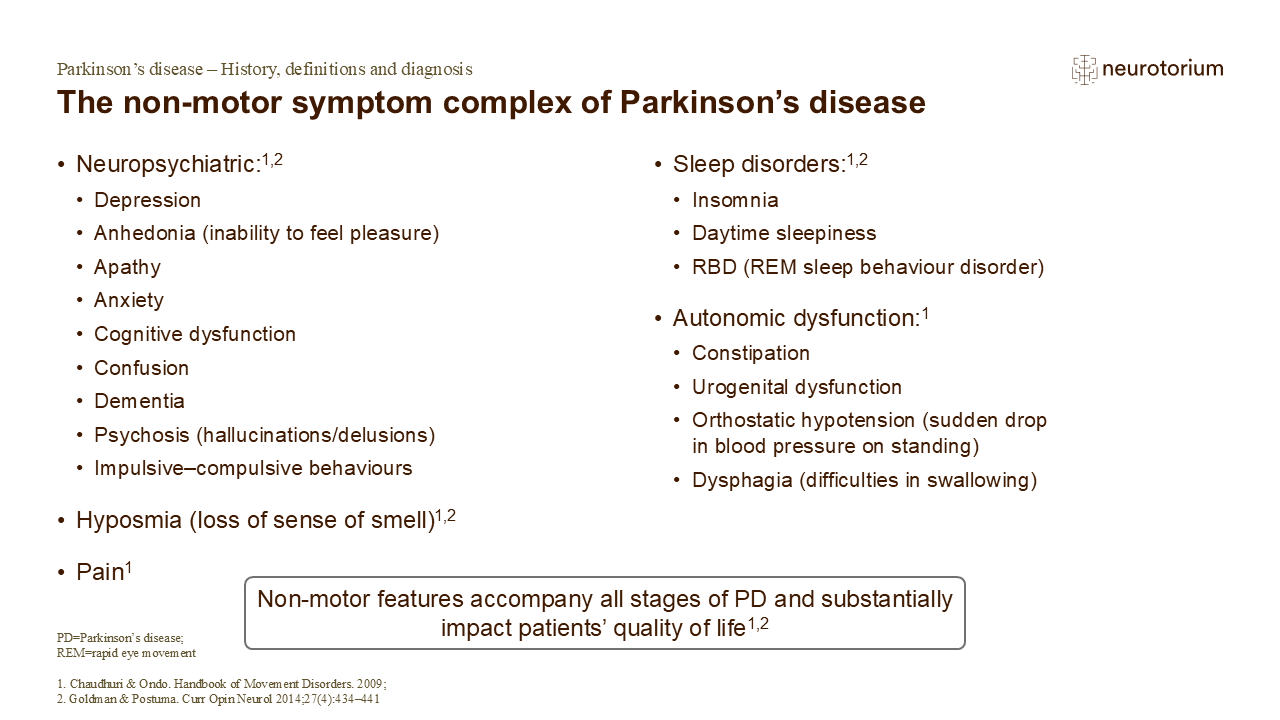
PD has traditionally been regarded as a motor disorder.3 However, physicians are increasingly realising the need to recognise non-motor symptoms, both for diagnostic and management purposes, to try to improve patients’ quality of life.3
Many non-motor symptoms, for example psychosis and excessive daytime sleepiness, are due to the effects of the PD itself as well as PD medications.4,5 Some of the non-motor symptoms of PD can be managed effectively with appropriate treatment.5 For example, depression may respond well to antidepressants, and constipation may be resolved with laxatives.5
References:
1.Chaudhuri KR, Ondo W. Handbook of Movement Disorders. London: Current Medicine Group, 2009.