

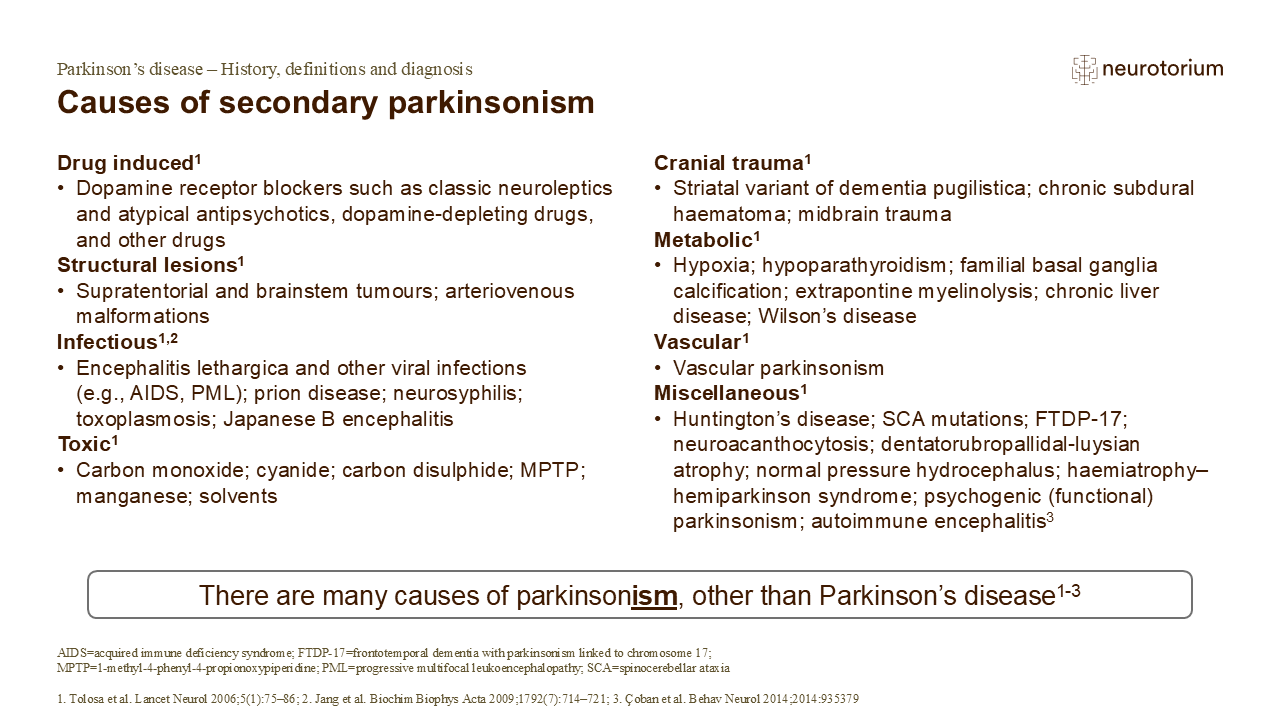
The symptoms of parkinsonism can be caused by a wide range of conditions, including infections; exposure to toxic chemicals; drug side effects; brain tumours; repeated head trauma; and metabolic disorders.1 ‘Secondary parkinsonism’ is caused by something other than truly ‘idiopathic’ PD.1 Accurate diagnosis of such cases is therefore critical to provide the correct treatment and prognosis for the patient.1
Drug-induced parkinsonism can often be reversed simply by identifying and withdrawing the drug responsible.4 Drugs leading to secondary parkinsonism include certain antipsychotic medications and antiemetics (to reduce nausea or vomiting).4
References:
1.Tolosa E, Wenning G, Poewe W. The diagnosis of Parkinson’s disease. Lancet Neurol 2006; 5 (1): 75–86.