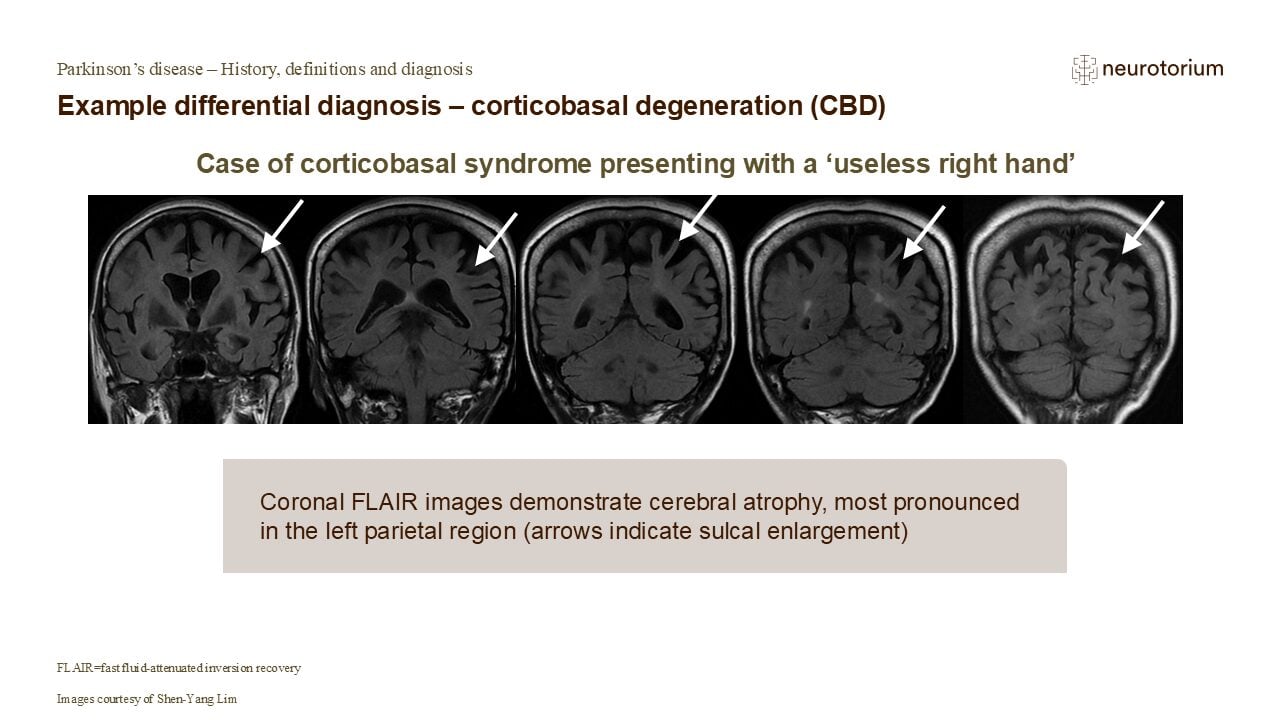
Corticobasal degeneration (CBD) is a rare, fatal, neurodegenerative condition.1 The features of CBD include asymmetrical rigidity, parkinsonism, dystonia, myoclonus, apraxia, cortical sensory loss, and an ‘alien hand’.2 Pathologically, CBS is characterised by plaques formed of tau protein (four-repeat tau) that form within striatal neurones and glial cells.1,2
Example differential diagnosis – corticobasal degeneration (CBD)