

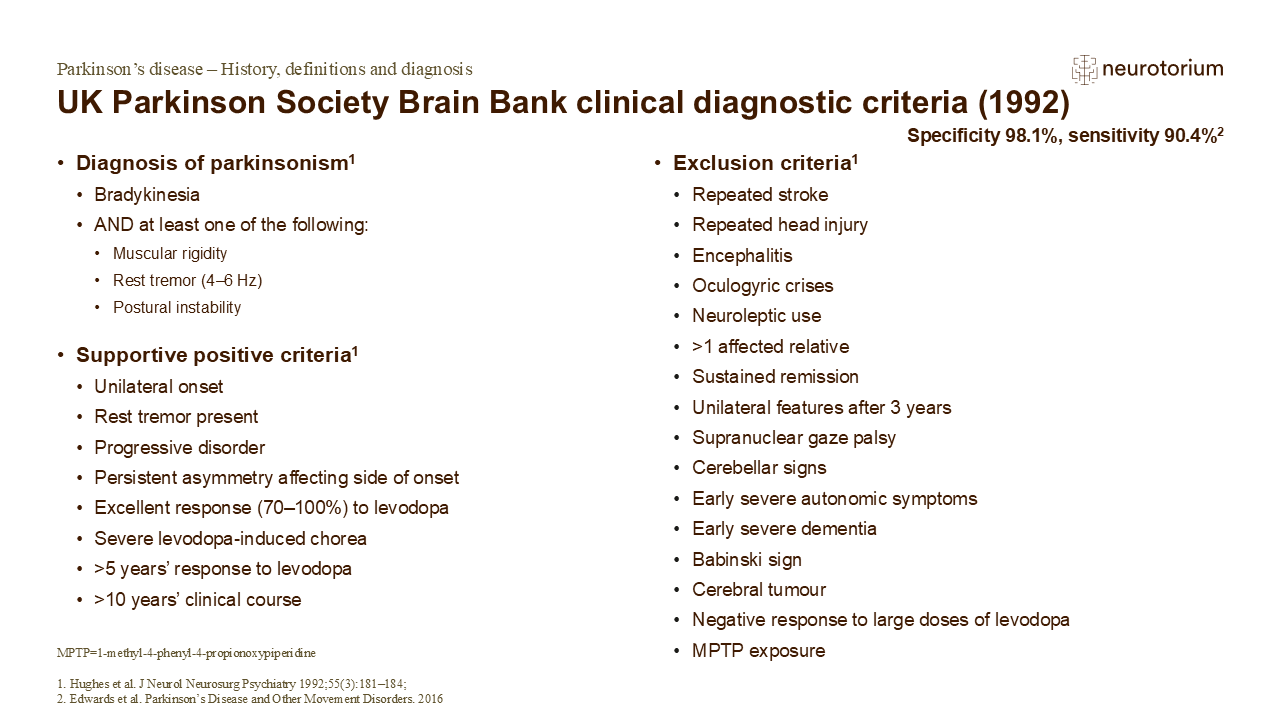
The UK Parkinson Society Brain Bank Clinical Criteria were created more than 30 years ago, yet they remain the most commonly used criteria for clinical diagnosis of PD.1,3
For a diagnosis of parkinsonism (not necessarily idiopathic PD), the criteria require the presence of bradykinesia and at least one other classic motor symptom of PD: muscular rigidity,4–6 Hz resting tremor, or postural instability not caused by primary visual, vestibular, cerebellar, or proprioceptive dysfunction.1
Once parkinsonism has been confirmed, the diagnosis can be further refined to determine whether or not the patient has PD or another form of parkinsonism.1 This is achieved by finding either supportive positive criteria (e.g., response to levodopa therapy, progressive symptoms) or exclusion criteria (e.g., head injury, repeated strokes, cerebellar symptoms).1