

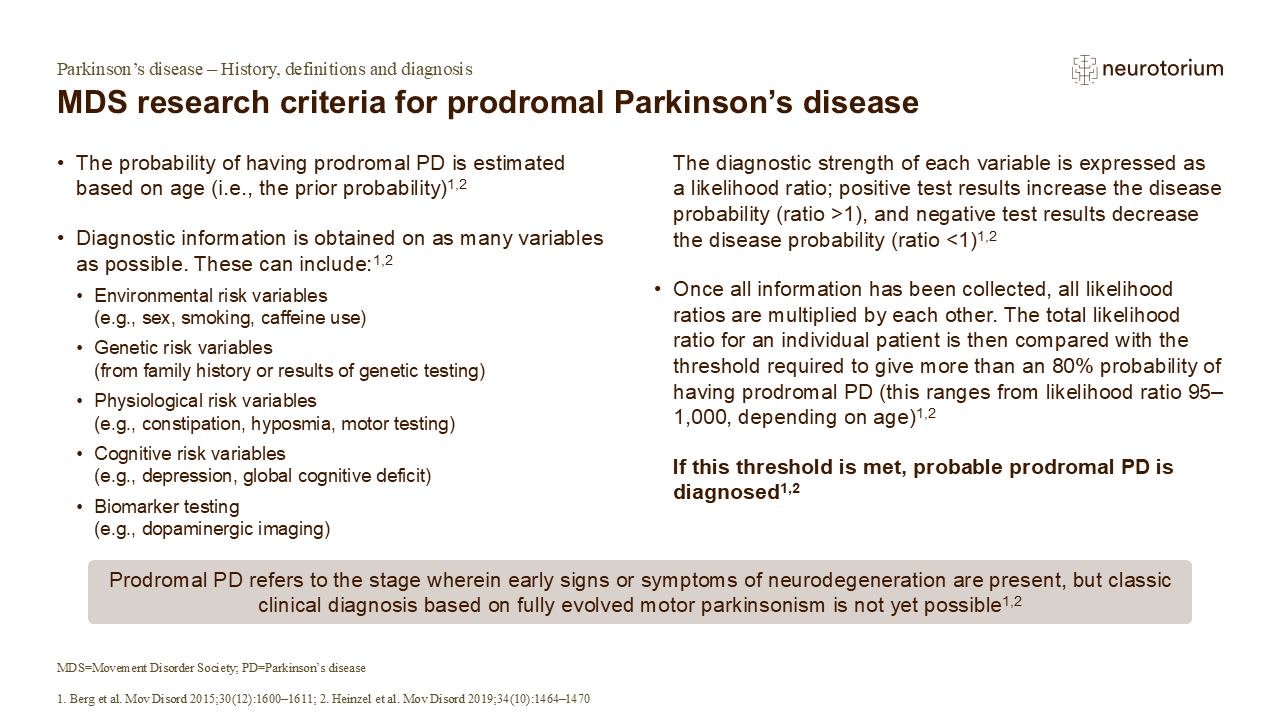
The Movement Disorder Society (MDS) research criteria for identification of prodromal PD were designed solely for research purposes since, for now at least, the lack of effective treatments that are able to halt the progression of prodromal PD makes their clinical use unwarranted.1,2 Ethical considerations may prevent the disclosure of a potentially distressing diagnosis in a non-clinical context, particularly if the research participant has not yet sought medical treatment for their symptoms, if present.1,2
When used correctly, the MDS criteria have at least 80% accuracy in diagnosing prodromal PD.1 A total score is calculated, which combines background risk, including environmental exposures and genetic traits, and the results of diagnostic markers, such as clinical symptoms (constipation, sleep disorder, impaired sense of smell, etc.) and biomarkers.1