

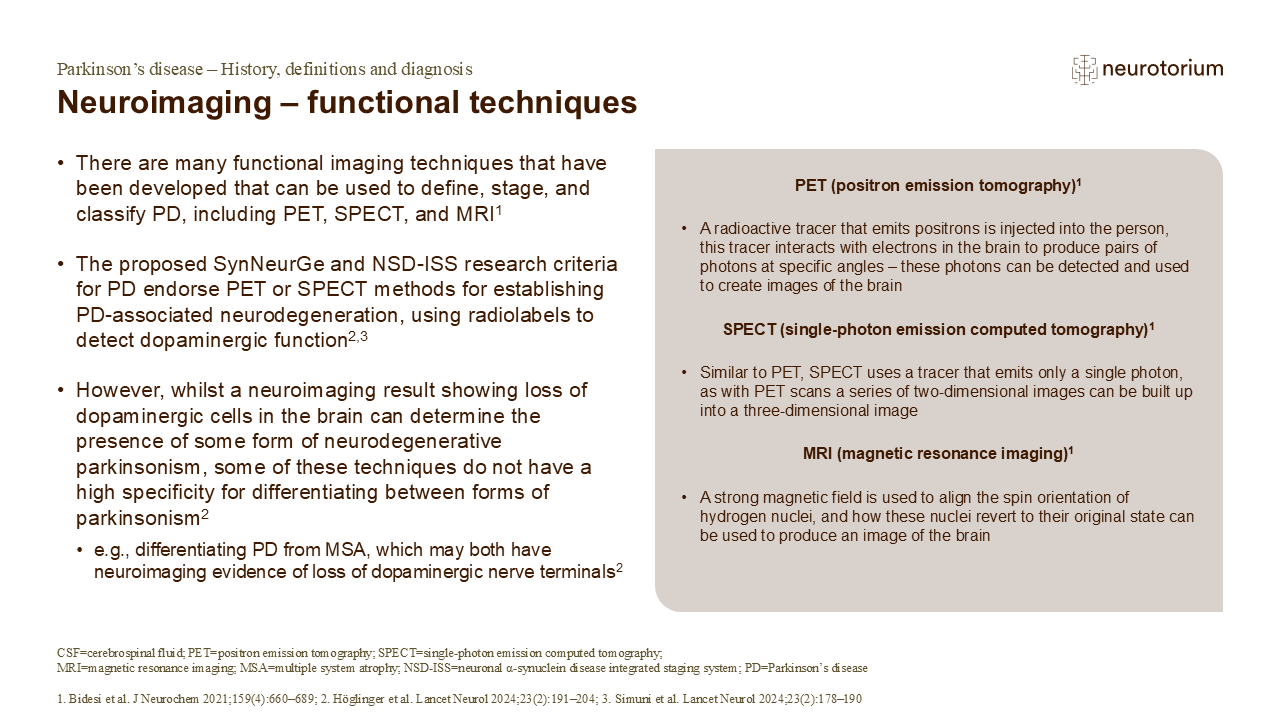
Neuroimaging is a powerful tool in the diagnosis of PD.1-3 As well as providing evidence of dopaminergic deficit – suggesting a form of parkinsonism – some forms of PET can be used to differentiate PD from other forms of neurodegenerative parkinsonism.2 The use of [¹⁸F]fluorodeoxyglucose PET scans can detect the characteristic patterns of damage to the brain parenchyma that are suggestive of progressive progressive supranuclear palsy, or multiple system atrophy, rather than Parkinson’s disease.2
References:
1.Bidesi NSR, Vang Andersen I, et al. The role of neuroimaging in Parkinson’s disease. J Neurochem 2021; 159 (4): 660–689.