

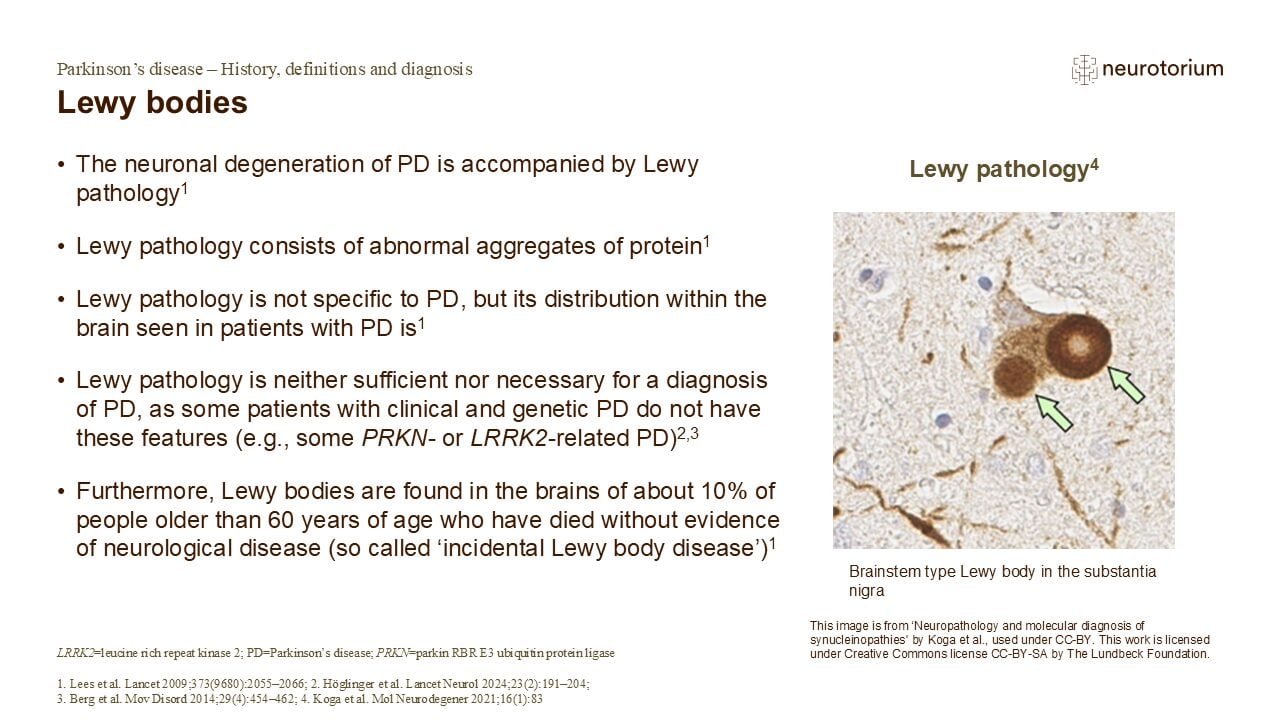
Lewy bodies are mostly comprised of abnormal, misfolded protein, and are found in the nerve cells of most patients with PD.1,5 The function of Lewy bodies in the pathogenesis of PD is still unclear, as they have been associated with both neuroprotection and toxicity.6 It may be the case that functionally different Lewy bodies exist, which differ in their localisation and morphology.6
Although strongly associated with PD, Lewy bodies can be detected in a proportion of people who die without having experienced any obvious neurological problems (so called ‘incidental Lewy body disease’).1 The distinguishing feature of PD in many cases, is the distinctive pattern of that this Lewy body pathology spreads through the brain.1
References:
1.Lees AJ, Hardy J, Revesz T. Parkinson’s disease. Lancet 2009; 373 (9680): 2055–2066.