

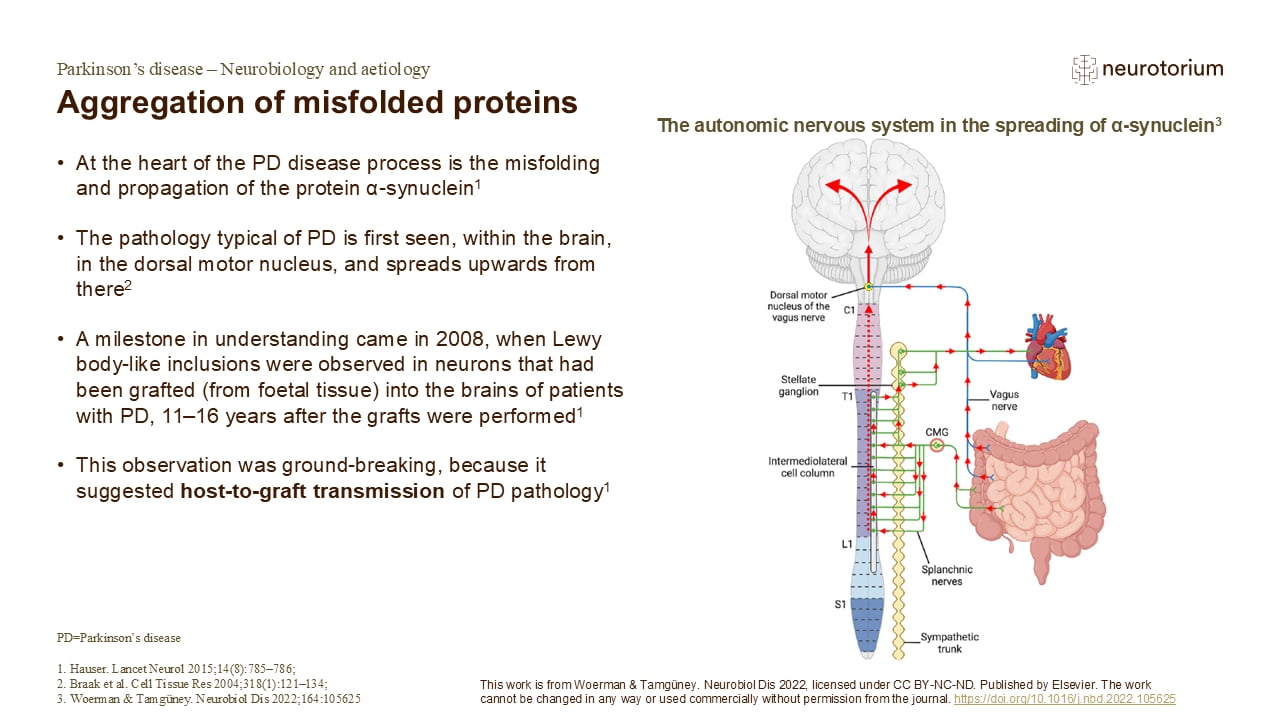
According to the staging scheme of Braak and colleagues, the accumulation of aggregated α-synuclein that forms Lewy pathology is first seen in the lower parts of the brainstem during early PD, and then spreads over time in a relatively predictable way through different regions of the brain.2 This phenomenon has been observed in the brain tissue of deceased patients with PD, yet the mechanisms by which this spreading occurs are not entirely certain.1 However, a growing body of evidence has suggested that the α-synuclein proteins themselves may be responsible for the transmission of PD pathology from one area of the brain to another.4 This is known as the ‘prion model’ of disease transmission.4
References:
1.Hauser RA. α-Synuclein in Parkinson’s disease: getting to the core of the matter. Lancet Neurol 2015; 14 (8): 785–786.