

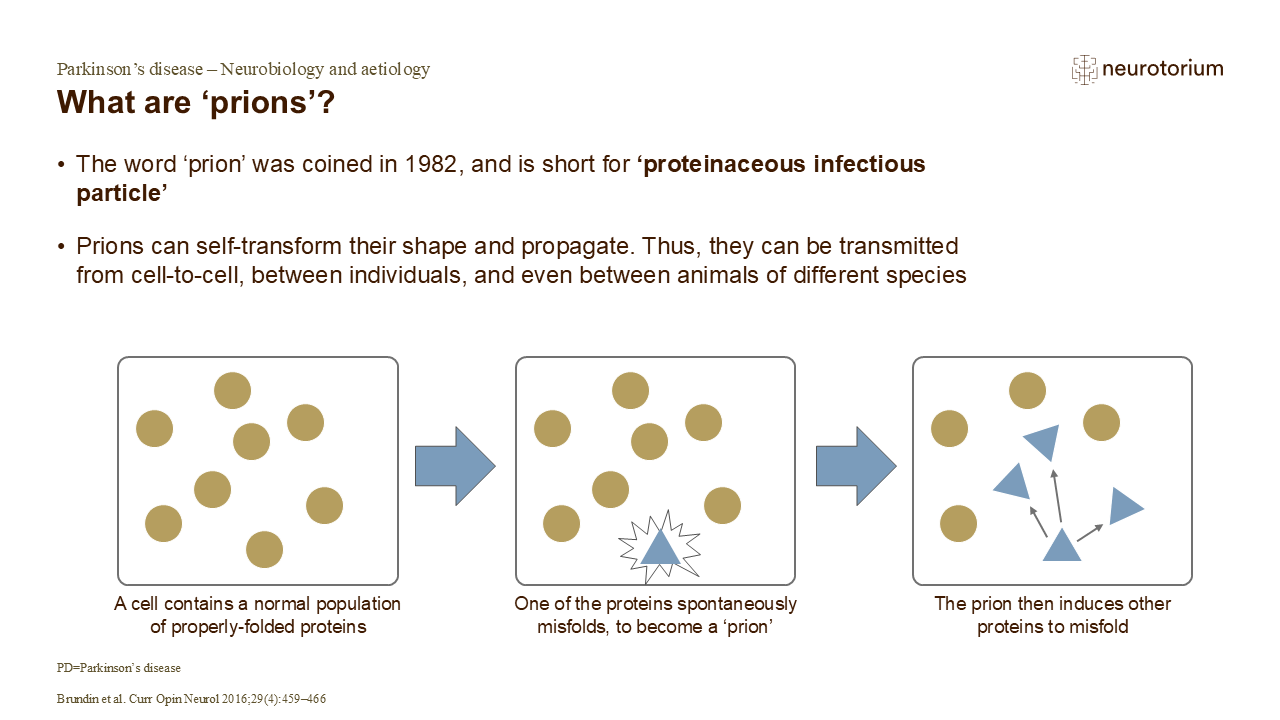
Prions are infectious and self-replicating protein entities, often involved in brain disorders.1,2 Well-known examples of prion disease include bovine spongiform encephalopathy (BSE), also known as ‘mad cow disease’, and variant Creutzfeldt-Jakob disease (vCJD), a rare but fatal form of BSE transmitted to humans, which led to over 100 deaths in the UK between 1995–2003.2
Because they are misfolded proteins, prions can form aggregates within cells.3 It is now increasingly clear that misfolded proteins implicated in neurodegenerative disorders, such as α-synuclein in PD and β-amyloid in Alzheimer’s disease, may self-propagate in a prion-like manner.1,3 It is hoped that, viewing neurodegenerative disorders such as PD as prion disorders may elucidate therapeutic targets in the future.4