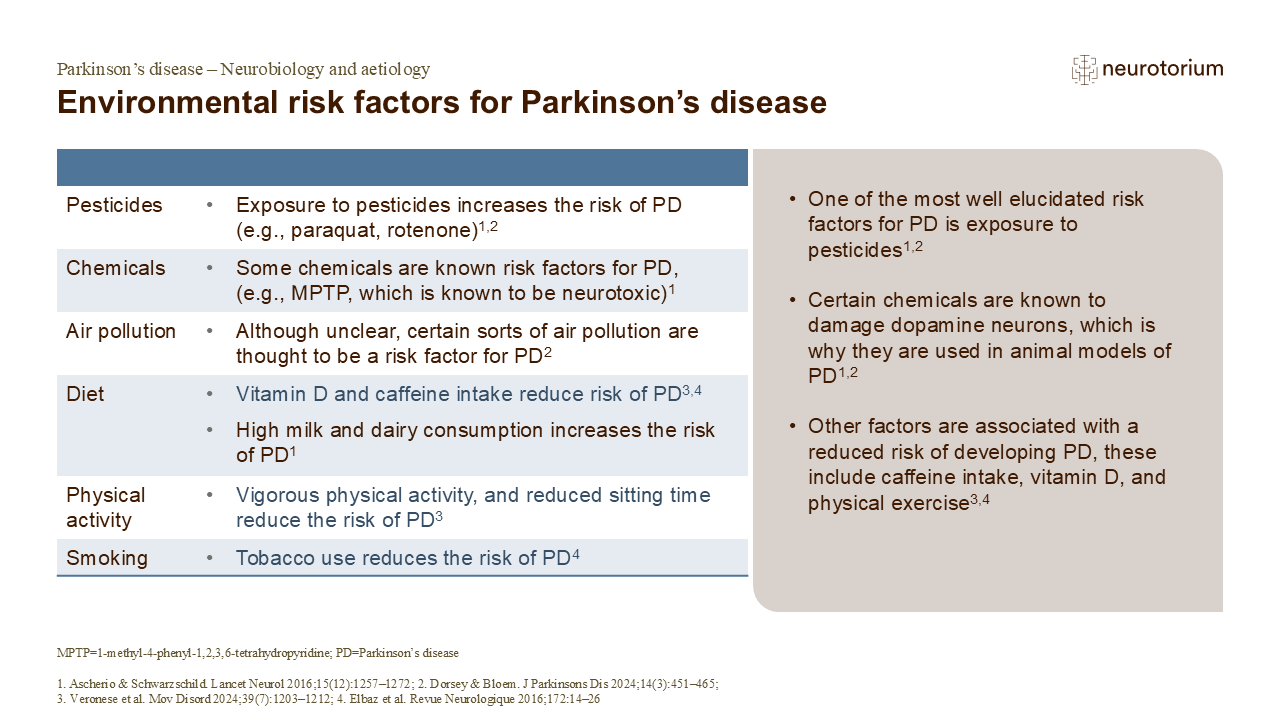
The epidemiology of PD includes many factors that have been identified as risk factors and protective factors, the balance of which, along with genetics, influences a person’s chance of developing PD.1-4 The balance of these risks is often complex,3 and the way in which these various known/hypothesized risk and protective factors interact with genes is a growing field of research.4 Beyond genes, there is increasing interest in how these environmental factors may interact with the complex and changing epigenetics governing how the genes are expressed.4
Environmental risk factors for Parkinson’s disease