

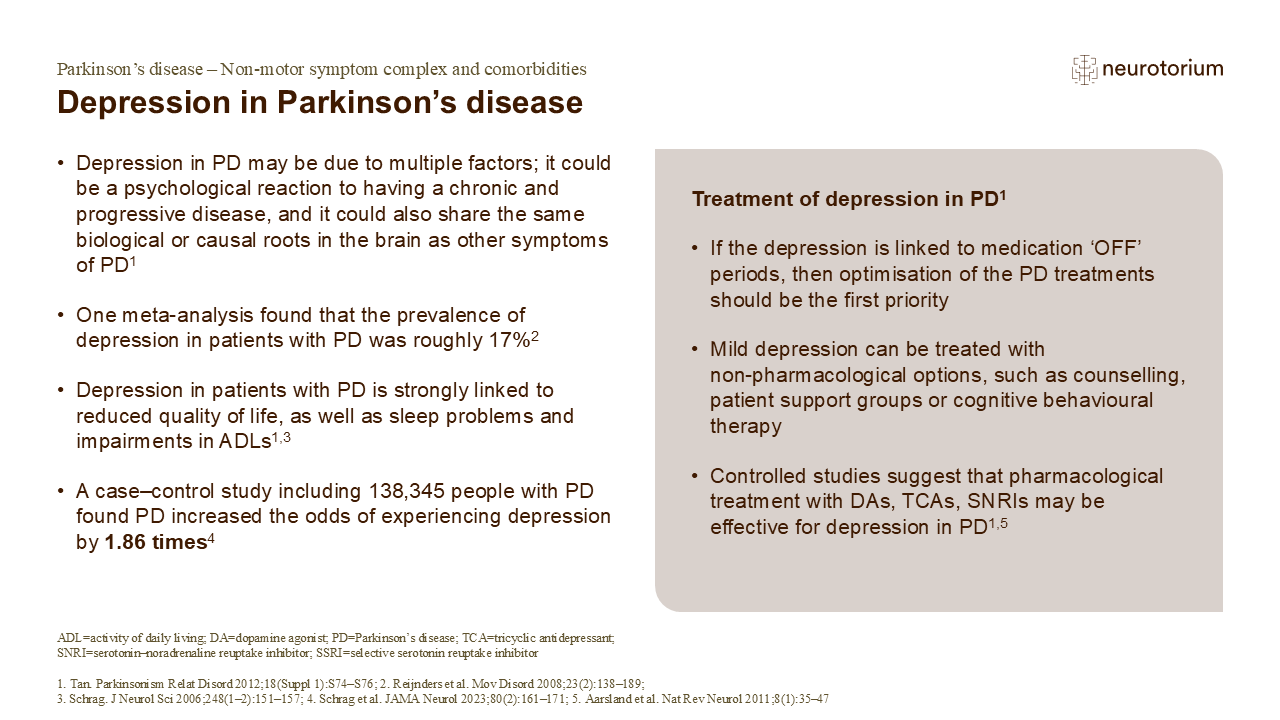
Depression is highly prevalent in PD; 35% of patients with PD report clinically significant depressive symptoms, and 17% have major depressive disorder.2,3 The symptoms of depression may often go unrecognised and, thus, untreated.6 The reduced facial expression (hypomimia) and general slowness of movement associated with bradykinesia may mask certain aspects of depression, complicating the diagnosis.7 Depression is a key determinant of reduced quality of life in patients with PD.1 It is associated with sleep disturbances, fatigue, decreased functional ability, and reduced ability to perform activities of daily living.1
The underlying cause of PD-related depression can be difficult to identify.1 In some cases, it may be a reactive state in which an individual struggles with their condition.1 Depression may also occur as an intrinsic part of the neurodegenerative pathology of PD (perhaps explaining the high risk of depression prior to the onset of clinical motor symptoms).1,8
Treatment of depression in PD is broadly similar to treatment of depression in people without PD.1,6 This comprises a mixture of pharmacological therapies,1 and non-pharmacological therapies (e.g., patient support groups,1 cognitive behavioural therapy,1 mindfulness training,9 and exercise).10 Patients may also benefit from adjusting their dopaminergic medication, since depressive symptoms can be worse during periods of dopamine deficiency (‘OFF’ periods).6
References:
1. Tan LC. Mood disorders in Parkinson’s disease. Parkinsonism Relat Disord 2012; 18 (Suppl 1): S74–S76.