

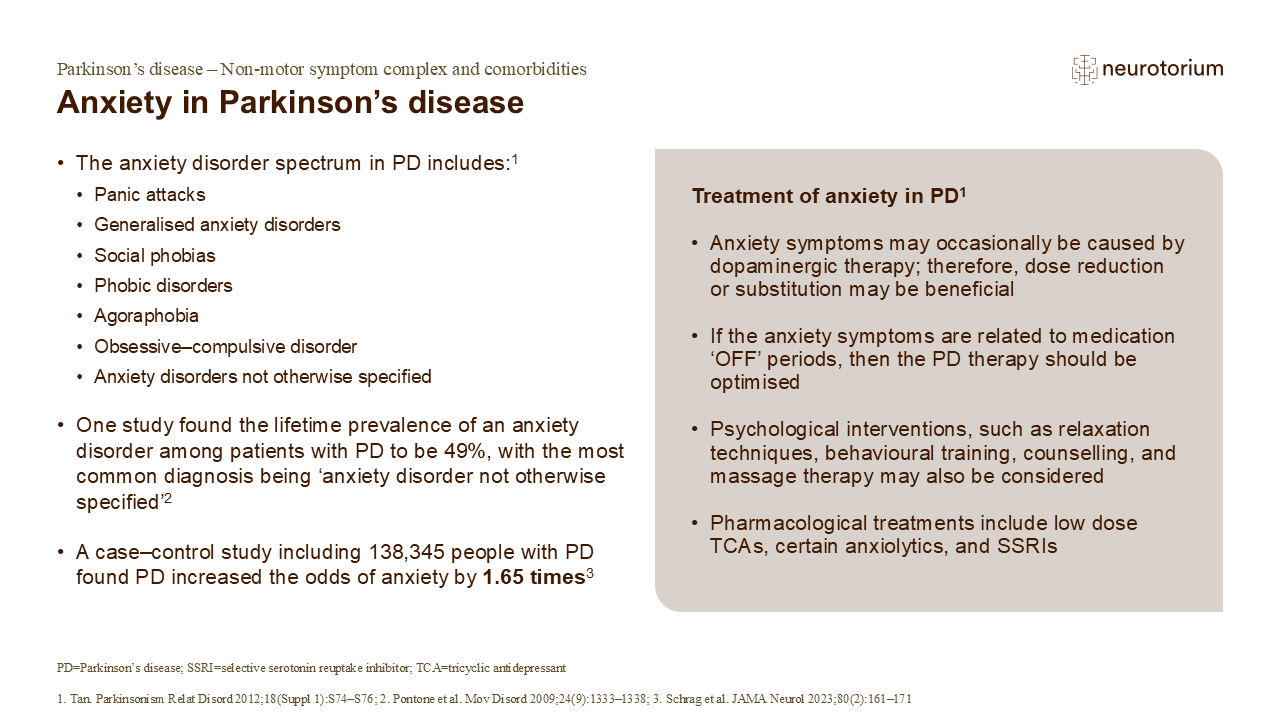
Anxiety is a common comorbidity in patients with PD and is likely to be underdiagnosed and undertreated.2,3 Anxiety may take several forms, including panic disorder, obsessive–compulsive disorder, generalised anxiety disorder (GAD), and social phobias, and often occurs alongside other mental health disorders, particularly depression.4 In some cases, anxiety precedes the onset of motor symptoms.4,5
High levels of anxiety are associated with more severe motor symptoms, and reduced ability to perform activities of daily living.4 However, the extent to which a loss of independence increases anxiety, or greater levels of anxiety results in a loss of independence, remains unclear.4 It is certainly plausible that neurodegeneration in the brainstem during early PD may have mood-altering effects, including increased anxiety and panic disorders.1
Anxiety may be present almost continuously, or only during or either side of ‘OFF’ periods.6 The dose of levodopa does not appear to affect the likelihood of anxiety, although the presence of drug-related complications, such as dyskinesias and ON/OFF fluctuations, may be a factor.4 Alterations to the drug regimen that reduce these side effects may therefore help to reduce anxiety.6
There is currently no proven drug therapy for the treatment of anxiety in PD.6,7 Common approaches to its management include the use of antidepressant medication, counselling, education-based strategies, and relaxation techniques.6 However, currently there is little evidence from clinical trials demonstrating the effectiveness of these interventions.6
References:
1. Tan LC. Mood disorders in Parkinson’s disease. Parkinsonism Relat Disord 2012; 18 (Suppl 1): S74–S76.