

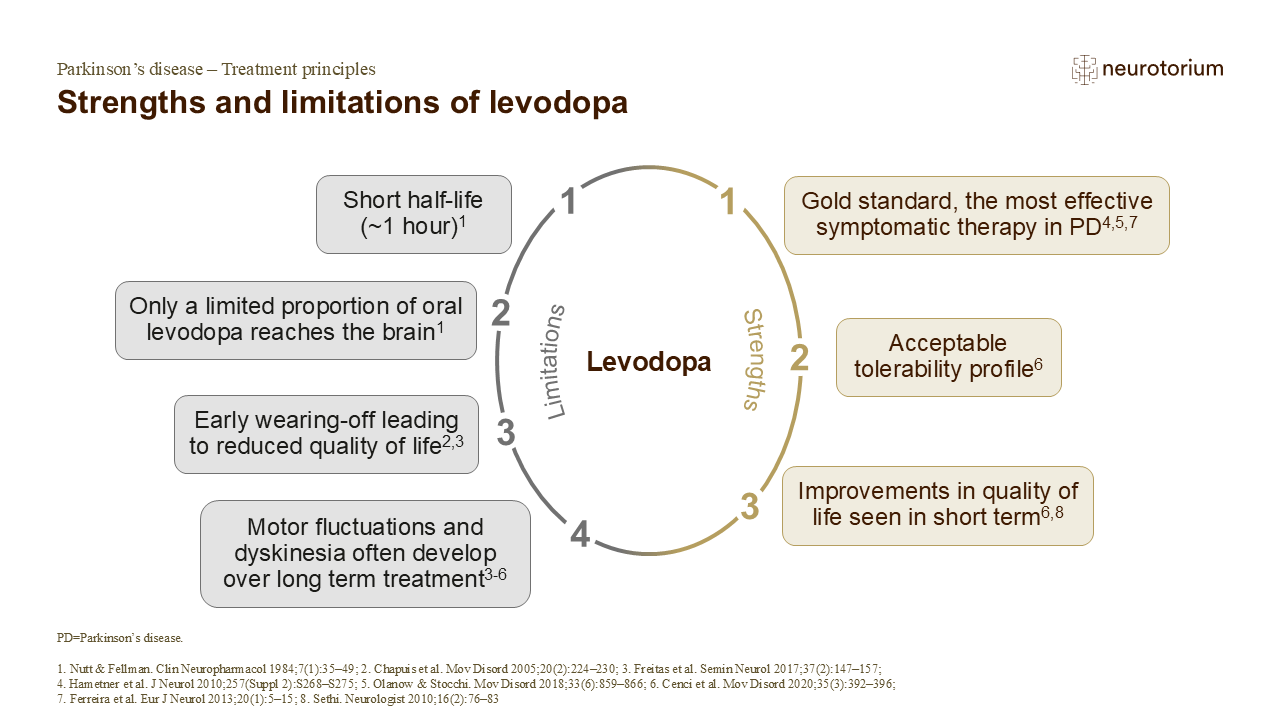
Although levodopa has been a major success story for the management of PD, it does have some limitations, such as the development of dopa-related response fluctuations (both motor and non-motor) and drug-induced dyskinesias.4
A single dose of levodopa/decarboxylase inhibitor relieves symptoms for several hours.4,9 Levodopa has a half-life of approximately 50 minutes once absorbed into the bloodstream, although the addition of a decarboxylase inhibitor extends the half-life to approximately 90 minutes.9,10 Therefore, patients typically need to take their levodopa several times during the day to control their symptoms.9
The duration of therapeutic effect of levodopa doses often decreases over time, as the patient begins to experience greater periods of motor fluctuations and/or drug-induced dyskinesias.2 From this point onwards, the patient experiences shorter periods of relief from motor symptoms, and greater periods of time with levodopa-induced complications, all of which can substantially impair the patient’s quality of life.2,4
References:
1. Nutt JG, Fellman JH. Pharmacokinetics of levodopa. Clin Neuropharmacol 1984; 7 (1): 35–49.
5. Olanow CW, Stocchi F. Levodopa: A new look at an old friend. Mov Disord 2018; 33 (6): 859–866.
6. Cenci MA, Riggare S, Pahwa R et al. Dyskinesia matters. Mov Disord 2020; 35 (3): 392–396.
10. Hauser RA. Levodopa: Past, present, and future. Eur Neurol 2009; 62 (1): 1–8.