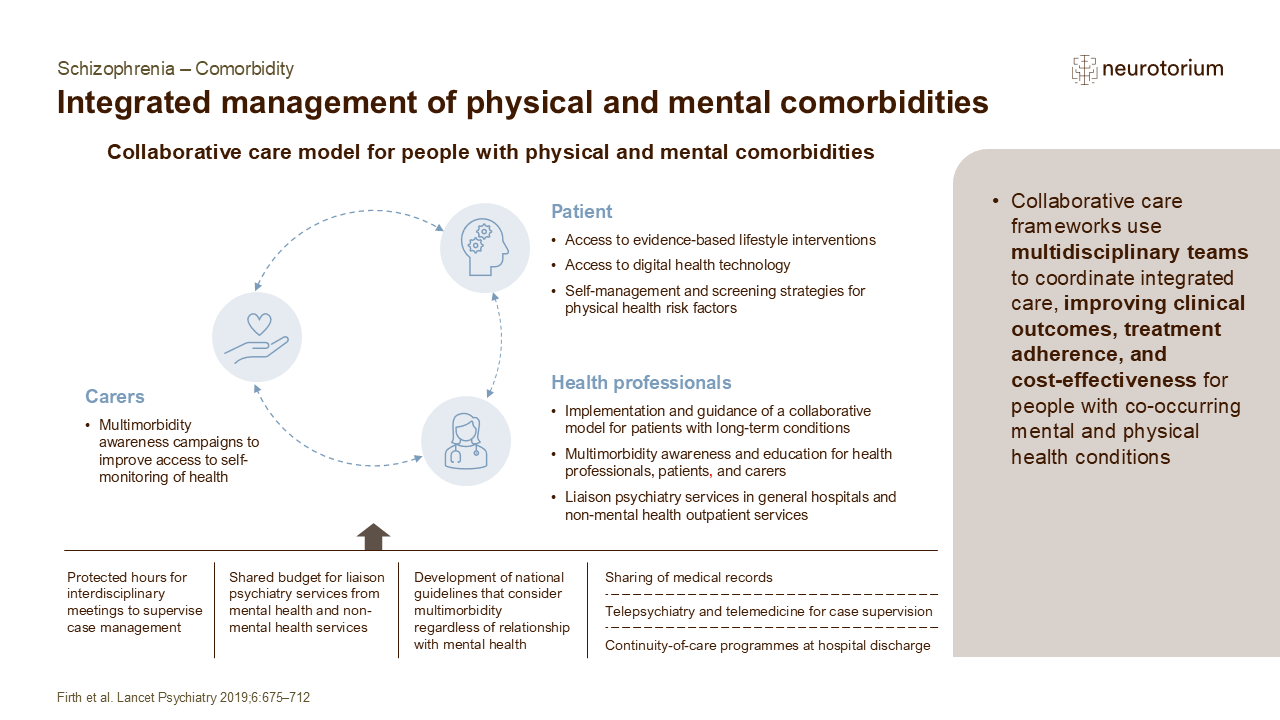
The slide summarises some of the barriers that exist that prevent the recognition and management of physical diseases in patients with severe mental illness, including schizophrenia.[De Hert et al., 2011a; De Hert et al., 2011b]

Treatment guidelines for schizophrenia recognise the high rates of somatic comorbidities in patients with schizophrenia, and recommend taking the patient’s medical history and general medical status into account when considering treatment options.[Falkai et al., 2005] Particularly, when considering antipsychotic treatments, the potential adverse effects should be considered; for example, a treatment with effects on QTc interval should not be prescribed to a patient with existing heart problems.[Falkai et al., 2005] One of the challenges of treating physical illnesses in patients with severe mental illness is that often the only contact they will have with a medical team will be with psychiatric services.[De Hert et al., 2011b] Although it places a burden on mental health services, it is increasingly being recognised that patients with schizophrenia should be monitored for physical health problems,[De Hert et al., 2011b] as well as the modifiable health risk factors that are largely to blame for the excess mortality in patients with severe mental illness.[De Hert et al., 2011a]

References:
De Hert M, Correll CU, Bobes J, et al. Physical illness in patients with severe mental disorders. I. Prevalence, impact of medications and disparities in health care. World Psychiatry 2011a; 10 (1): 52–77.

De Hert M, Cohen D, Bobes J, et al. Physical illness in patients with severe mental disorders. II. Barriers to care, monitoring and treatment guidelines, plus recommendations at the system and individual level. World Psychiatry 2011b; 10 (2): 138–151.

Falkai P, Wobrock T, Lieberman J, et al. World Federation of Societies of Biological Psychiatry (WFSBP) guidelines for biological treatment of schizophrenia, Part 1: acute treatment of schizophrenia. World J Biol Psychiatry 2005; 6 (3): 132–191.