

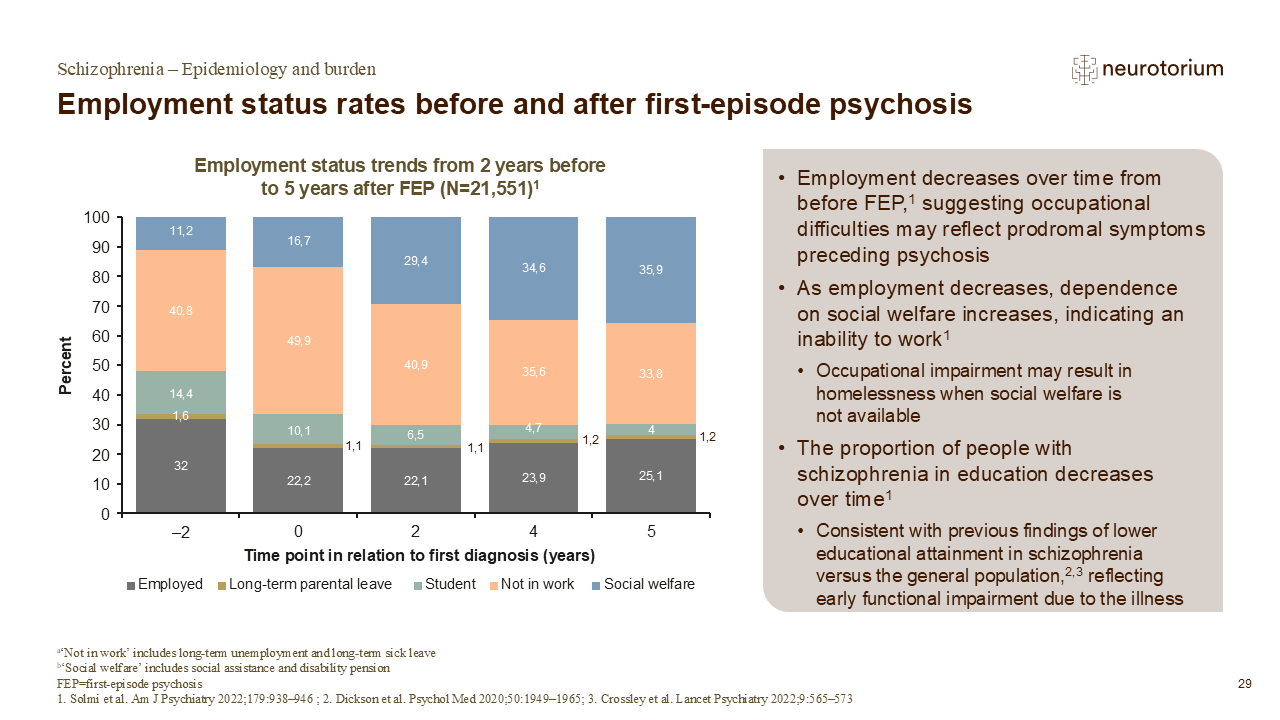
In this study, the main outcome measure was any sickness absence or disability pension.1 In Sweden, individuals aged ≥16 years in employment can claim sickness absence benefits from the Social Insurance Agency if they have been absent from work due to sickness for more than 14 days; individuals aged 19–29 years can claim a temporary disability pension. All individuals aged 30–64 years can receive a permanent disability pension if their work capacity is permanently reduced due to morbidity. The secondary outcome was long-term sickness absence (>90 days), encompassing both sickness absence benefits and disability pension. People were categorized yearly based on their main activity or source of income from 2 years before to 5 years after the date of first diagnosis and were initially designated as employed or not employed based on income. Alternative activities and sources of income were evaluated by the number of days of receipt of social security benefits (including sickness absence, parental leave, and disability pension), and the number of days registered as unemployed.1
References: