

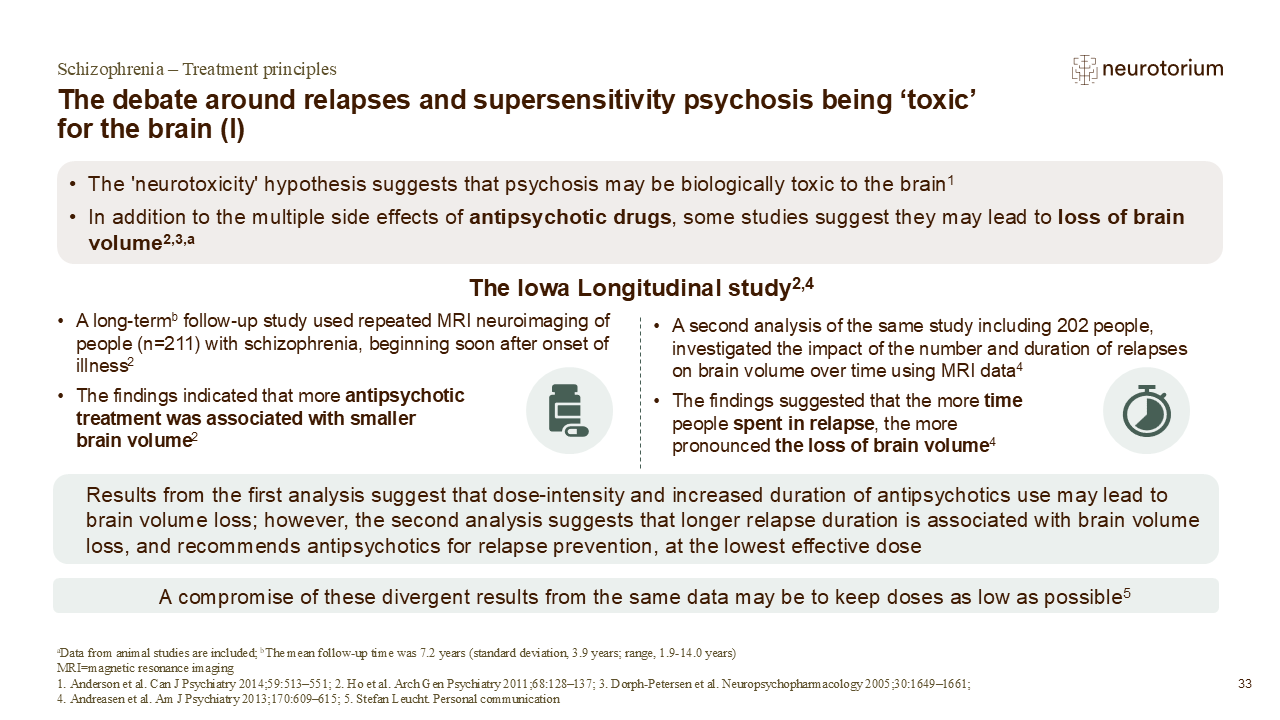
The Iowa Longitudinal study included 542 people with schizophrenia, who were examined at 6-month intervals.2,4
- The first analysis included 211 people who had ≥2 high-resolution MRIs over a mean 7.2 years. A total of 674 scans were analyzed for this cohort. Four potential predictors of brain volume change were investigated: illness duration, antipsychotic treatment, illness severity, and substance abuse.2
- The second analysis included 202 people who had ≥2 structural MRIs and were followed up for ≥5 years. A total of 659 scans were analysed for this cohort. The primary variables of interest were the change in brain volume associated with relapse duration and the change in brain volume associated with the intensity of antipsychotic treatment as measured in dose-years.4
References:
1. Anderson KK, Voineskos A, Mulsant BH, et al. The Role of Untreated Psychosis in Neurodegeneration: A Review of Hypothesized Mechanisms of Neurotoxicity in First-Episode Psychosis. Can J Psychiatry 2014; 59: 513–551.
2. Ho BC, Andreasen NC, Ziebell S, et al. Long-term antipsychotic treatment and brain volumes: a longitudinal study of first-episode schizophrenia. Arch Gen Psychiatry 2011; 68: 128–137.
3. Dorph-Petersen KA, Pierri JN, Perel JM, et al. The influence of chronic exposure to antipsychotic medications on brain size before and after tissue fixation: a comparison of haloperidol and olanzapine in macaque monkeys. Neuropsychopharmacology 2005; 30: 1649–1661.
4. Andreasen NC, Liu D, Ziebell S, et al. Relapse duration, treatment intensity, and brain tissue loss in schizophrenia: a prospective longitudinal MRI study. Am J Psychiatry 2013;170:609–615.
5. Stefan Leucht. Personal communication.